
Polar Bear Coloring Pages
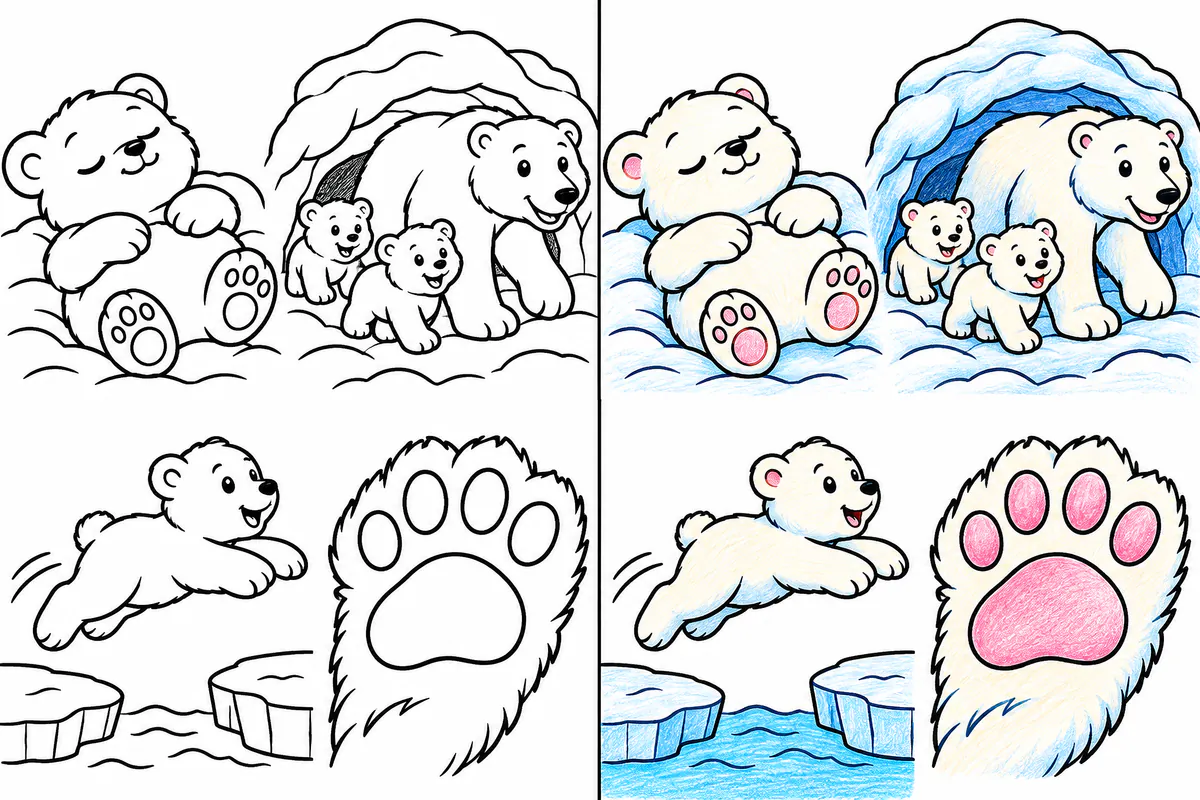
Scientists count the polar bear as a marine mammal, in the same group as seals and whales, because it spends so much of its life on sea ice and in the water. These polar bear coloring pages follow that life through the year: a mother pushing out of her snow den in spring with two cubs, a bear leaping a gap between floes and a long, quiet wait on the autumn tundra for the ice to return.
The youngest colorists can start with a cub napping on its back or tumbling down a snowbank, then try a giant paw drawn close enough to show the fur between the toe pads. Older kids will find belugas at the ice edge, ivory gulls near a resting bear and a split view of an iceberg above and below the waterline. A white bear on white paper needs shadows, so shade it with cream, pale yellow and blue-gray. Browse more wildlife in the animal coloring pages, or visit the penguin coloring pages for birds from the opposite end of the planet.
Table of Contents
Polar Bear Cubs Napping, Tumbling and Stretching
Seven pages with one round, fuzzy cub each: a big yawn after a nap, a tumble down a snowbank, a wobbly balance on a tiny ice floe and a nap flat on its back with all four paws up. On the medium page a cub pounces on a snow pile. Shade the fur with cream and pale gray, and save pure white for the brightest edges.
 EasyNew!
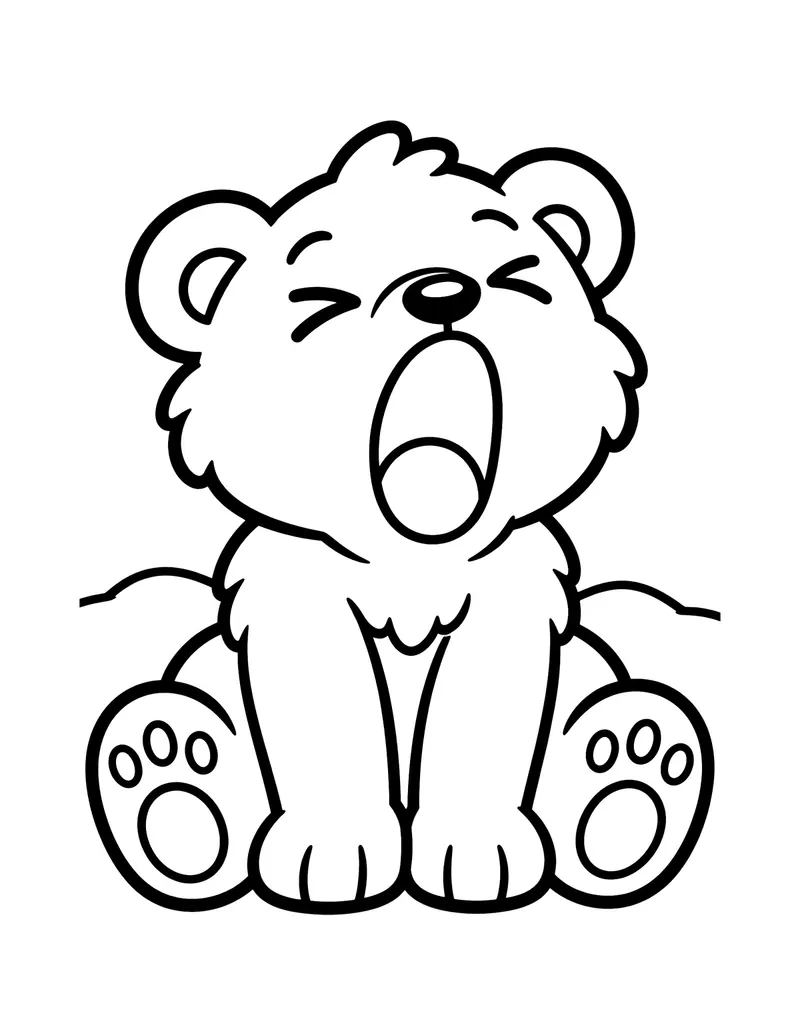
Polar Bear Cub Yawning After a Nap
That is one enormous yawn!
Download PDF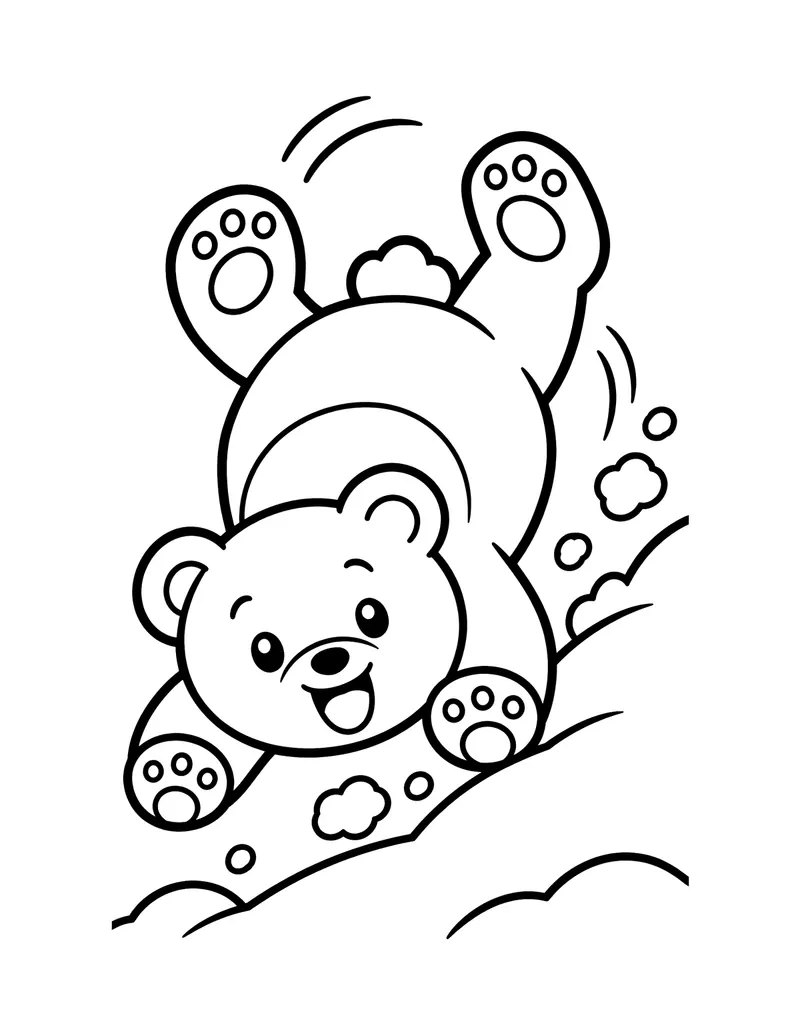 EasyNew!
Polar Bear Cub Tumbling Down a Snowbank
Whoosh!
Download PDF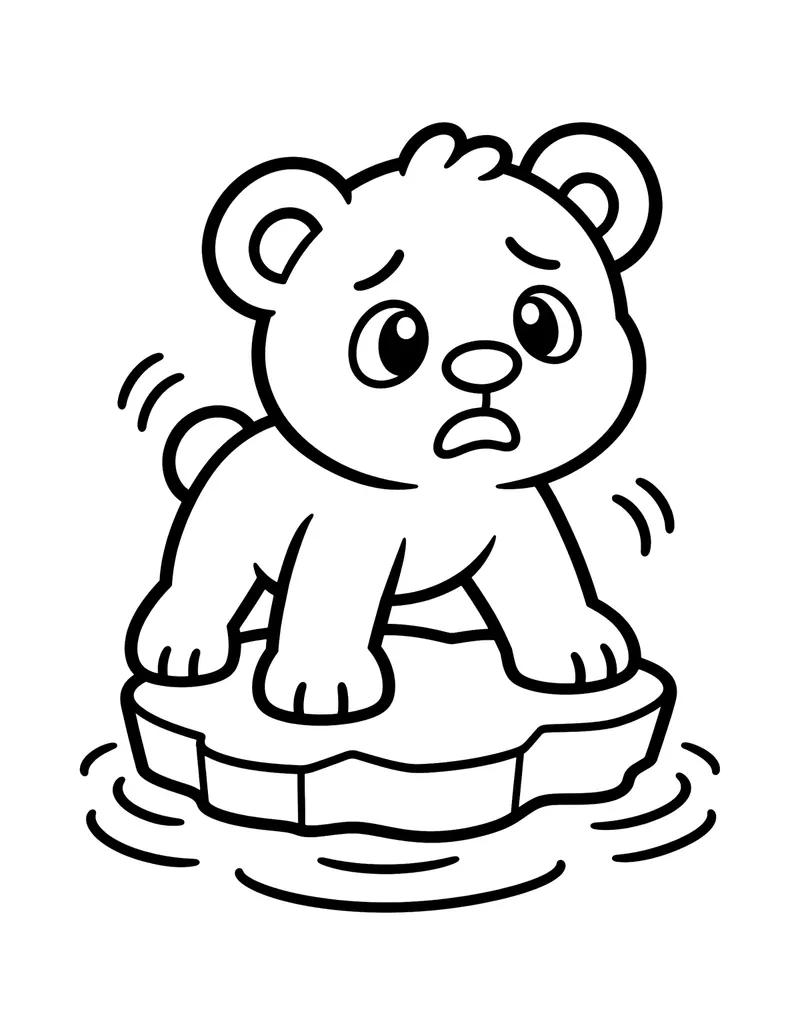 EasyNew!
Polar Bear Cub Balancing on an Ice Floe
Hold steady, little bear!
Download PDF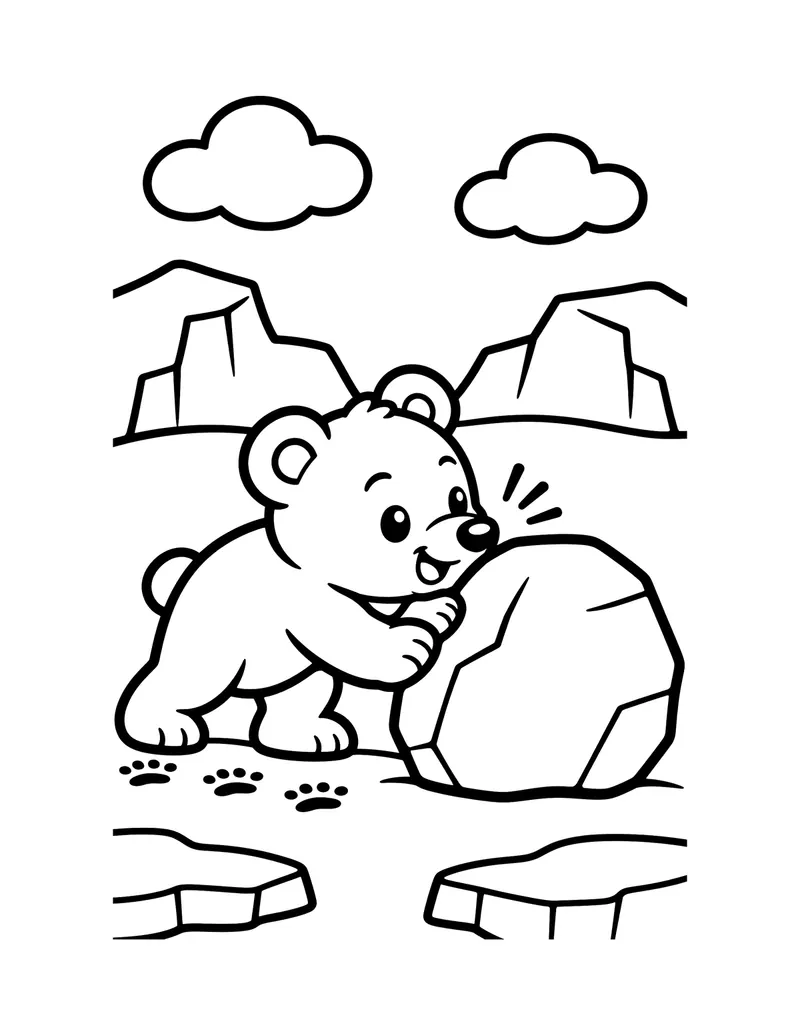 EasyNew!
Polar Bear Cub Pushing an Ice Ball
The big job in this scene is moving a chunk of ice.
Download PDF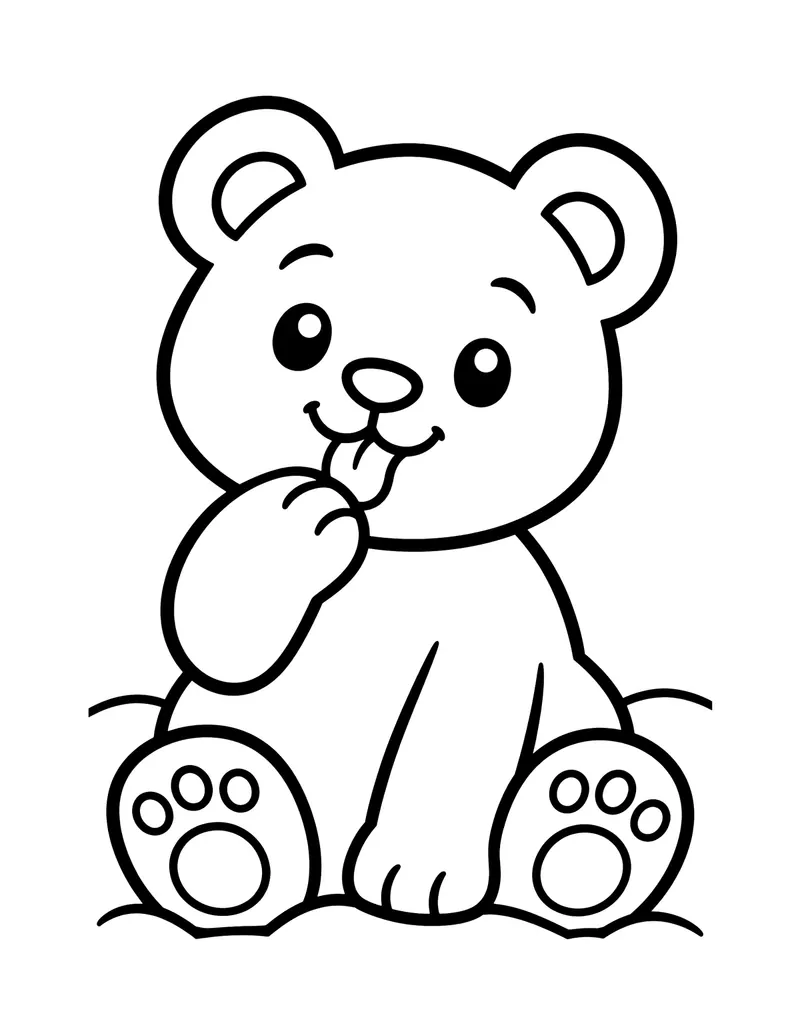 EasyNew!
Polar Bear Cub Licking Its Paw
Bath time or snack leftovers?
Download PDF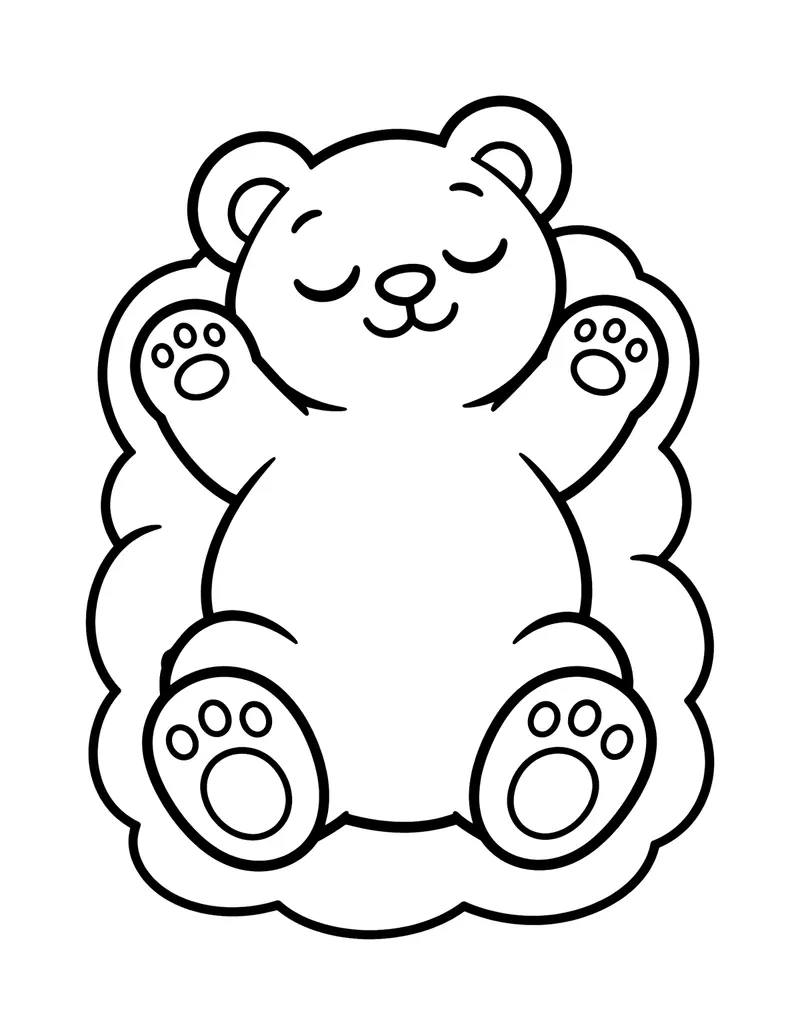 EasyNew!
Polar Bear Cub Asleep on Its Back
Shh, someone is napping.
Download PDF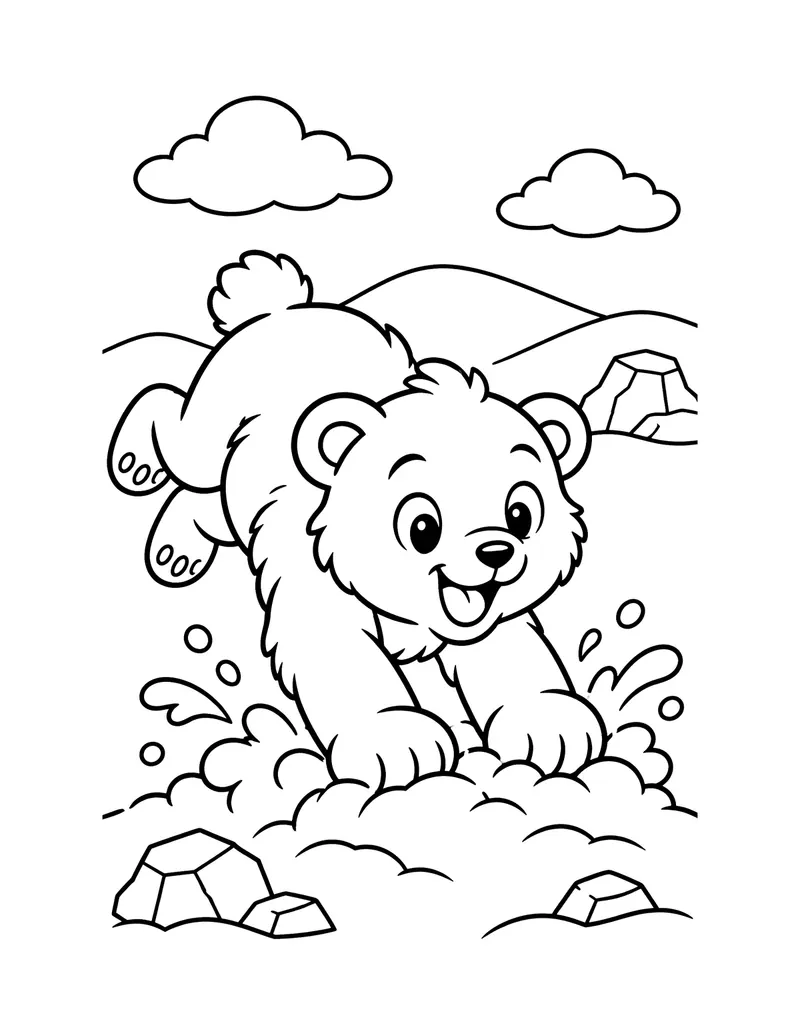
Big Polar Bear Faces and Paws Up Close
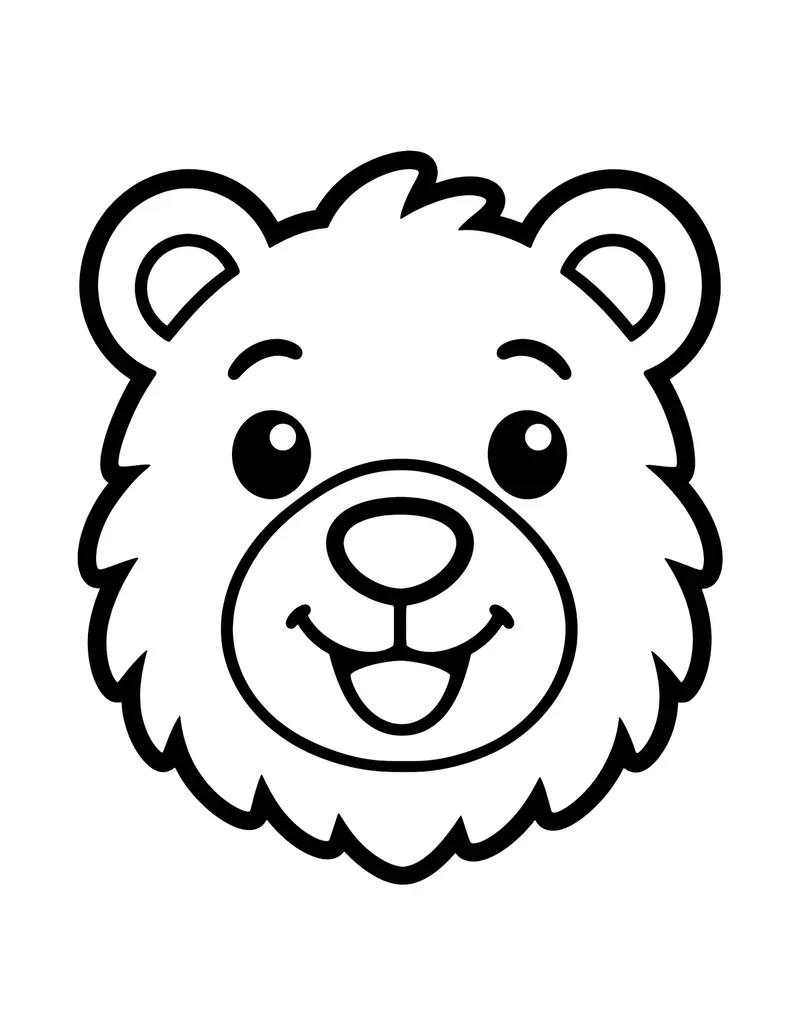
These pages get so close that one bear fills the sheet: a front-facing portrait with small round ears, a giant front paw with big rounded toe pads and a shaggy fur edge, a bear resting its chin on its paws and a muzzle sniffing the air. The last one rises out of the water with drips running off its head. Keep the black pencil for the nose, lips and eyes only.
 EasyNew!
Polar Bear Face Portrait
One friendly face fills this whole page.
Download PDF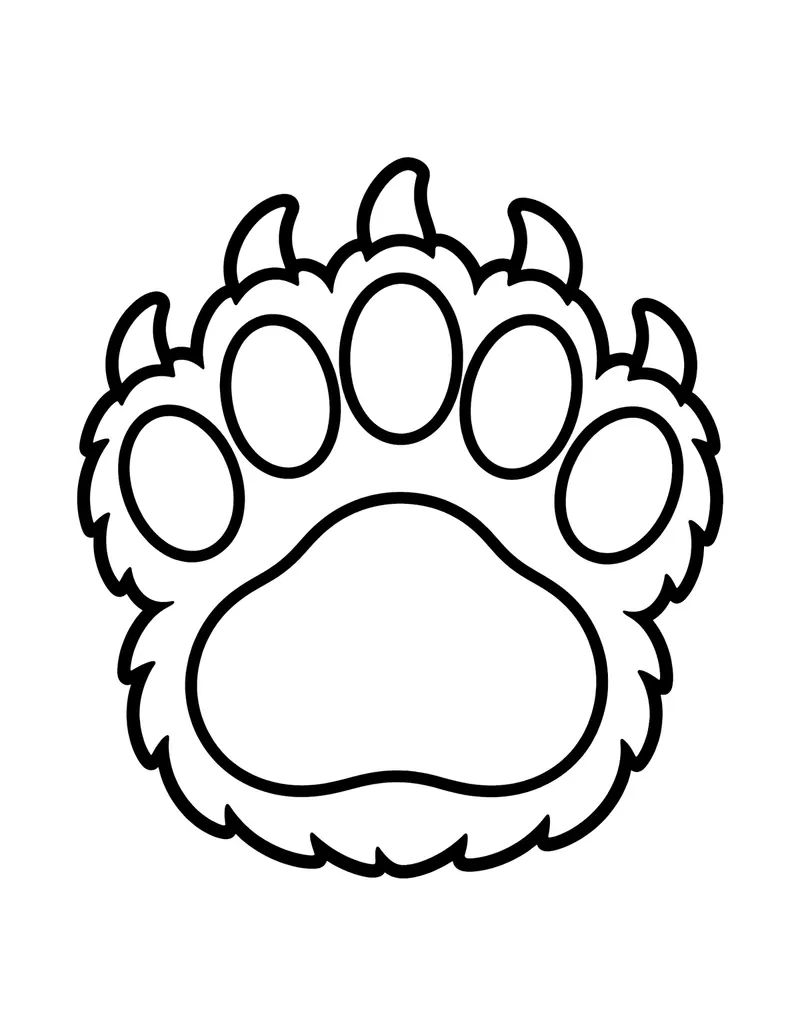 EasyNew!
Giant Polar Bear Paw Close-Up
Five oval toe pads, one wide heel pad and five curved claws make up this giant paw, seen from underneath.
Download PDF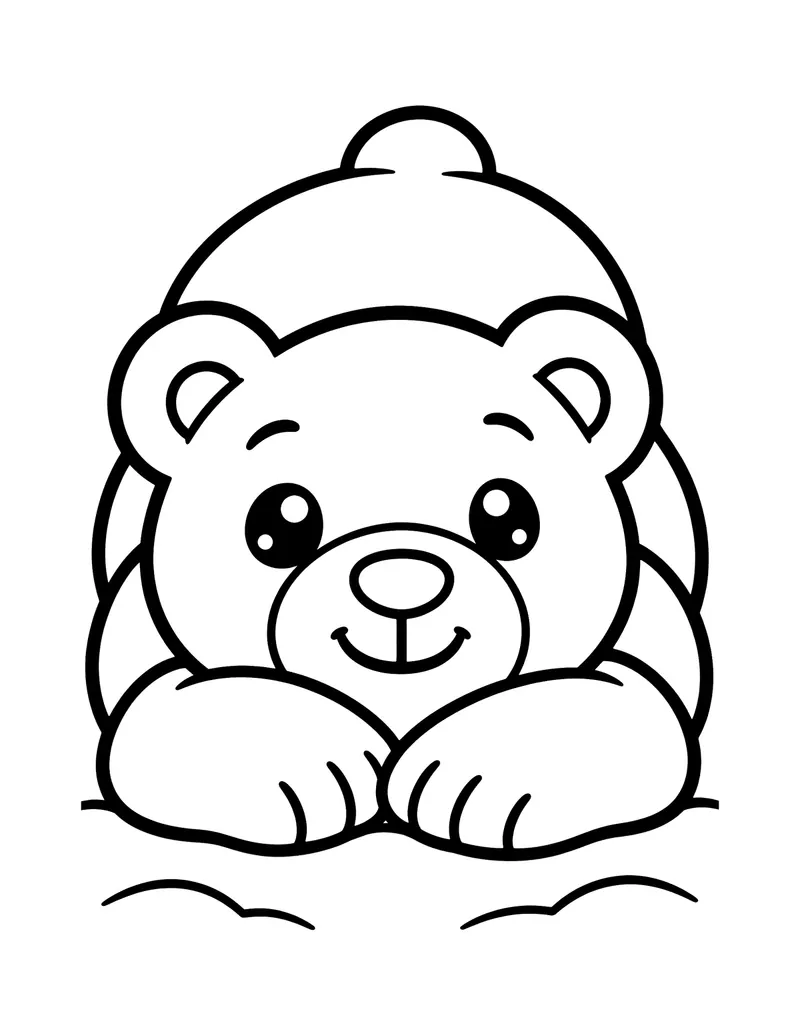 EasyNew!
Polar Bear Resting Its Chin on Its Paws
Two chunky front paws meet at the bottom of this page, and just above them is a smiling bear face looking straight…
Download PDF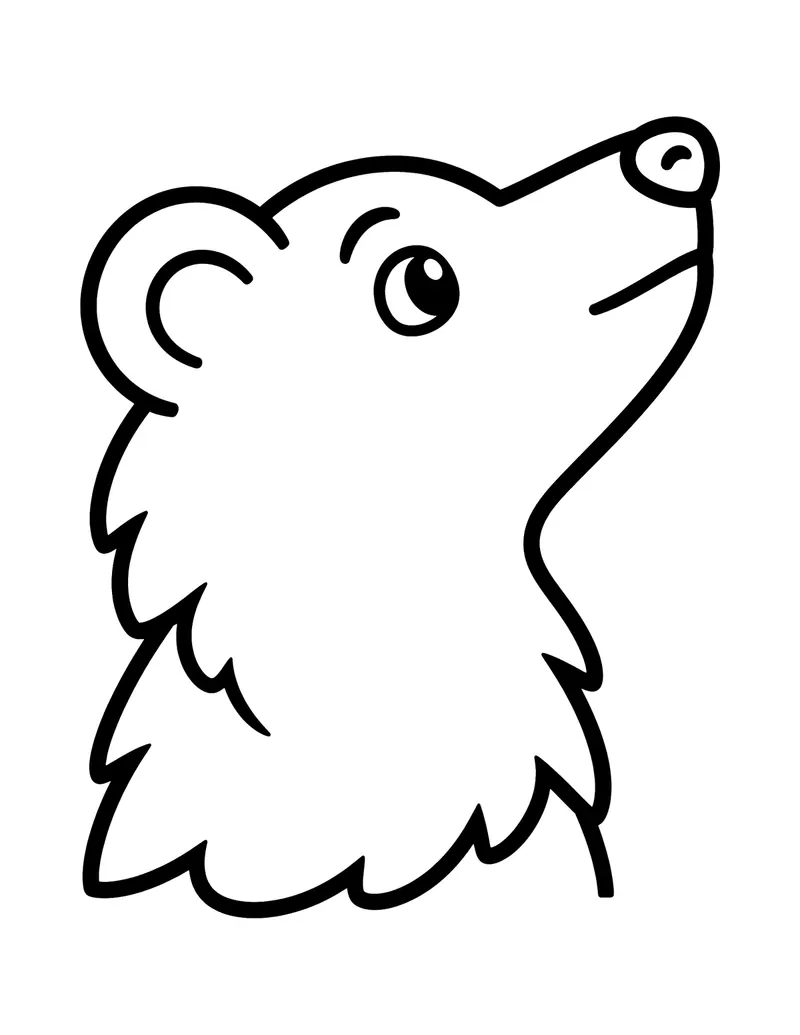 EasyNew!
Polar Bear Sniffing the Air Profile
With its nose tipped up toward the sky, this bear seems to have just caught an interesting scent on the breeze.
Download PDF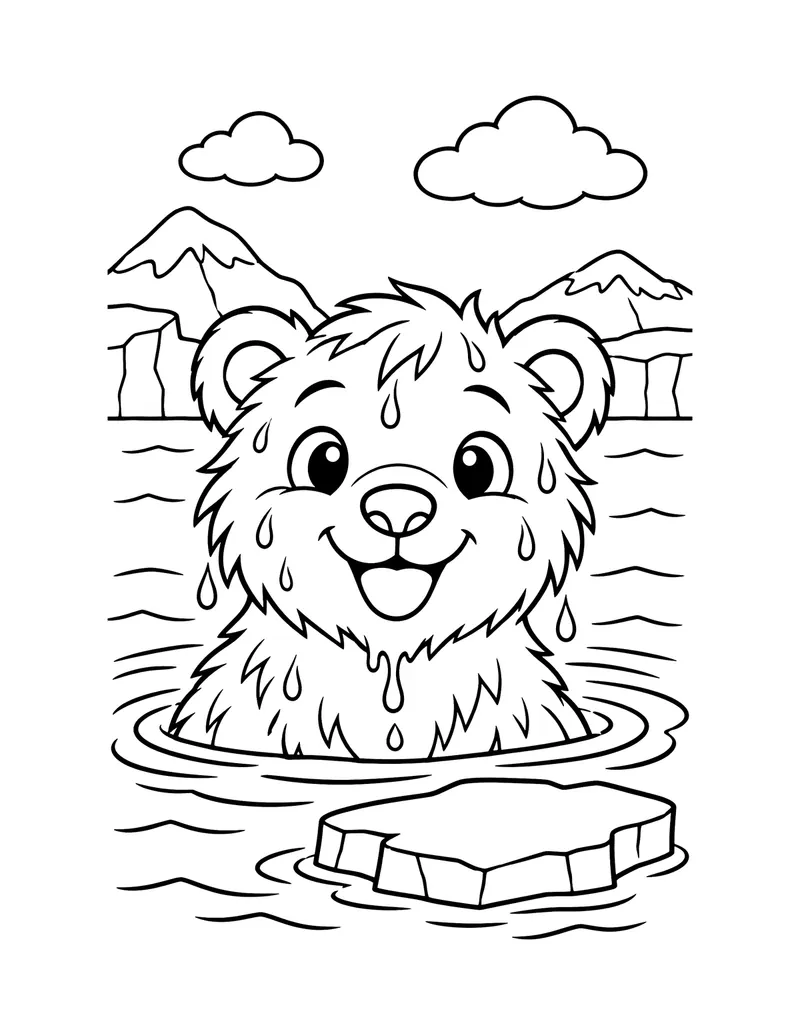 MediumNew!
Polar Bear Rising Out of the Water
Splash!
Download PDFMother Polar Bears and Their Cubs
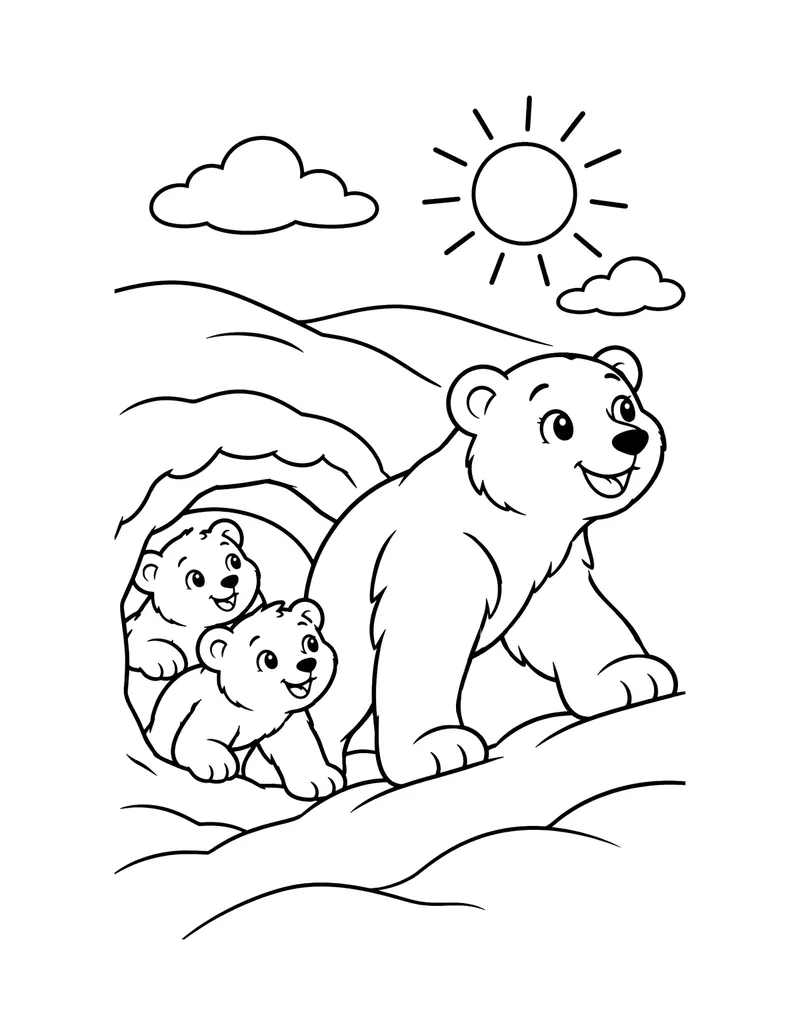
Polar bear mothers raise their cubs alone, and the cubs stay with them for more than two years. These pages show a family leaving the snow den in spring, a cub riding on its mother's back, a cub tucked between her legs out of the wind and a sleepy pile of three. Give the mother a slightly deeper cream than the cubs so they stand apart.
 MediumNew!
Mother Polar Bear Leaving the Den in Spring
Here comes the family's first look outside: a mother bear steps out of a round opening in the snow, while two small…
Download PDF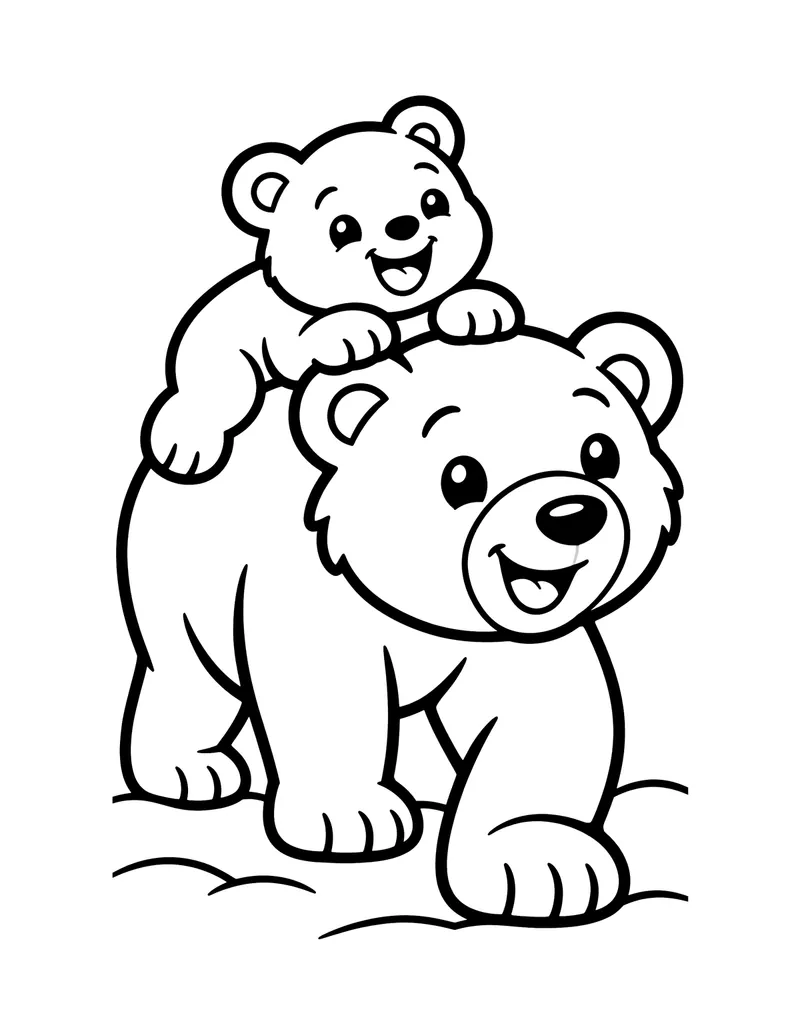 EasyNew!
Polar Bear Cub Riding on Mom's Back
A giggling cub gets the best seat in the Arctic, draped over its mother's shoulders with both front paws resting on…
Download PDF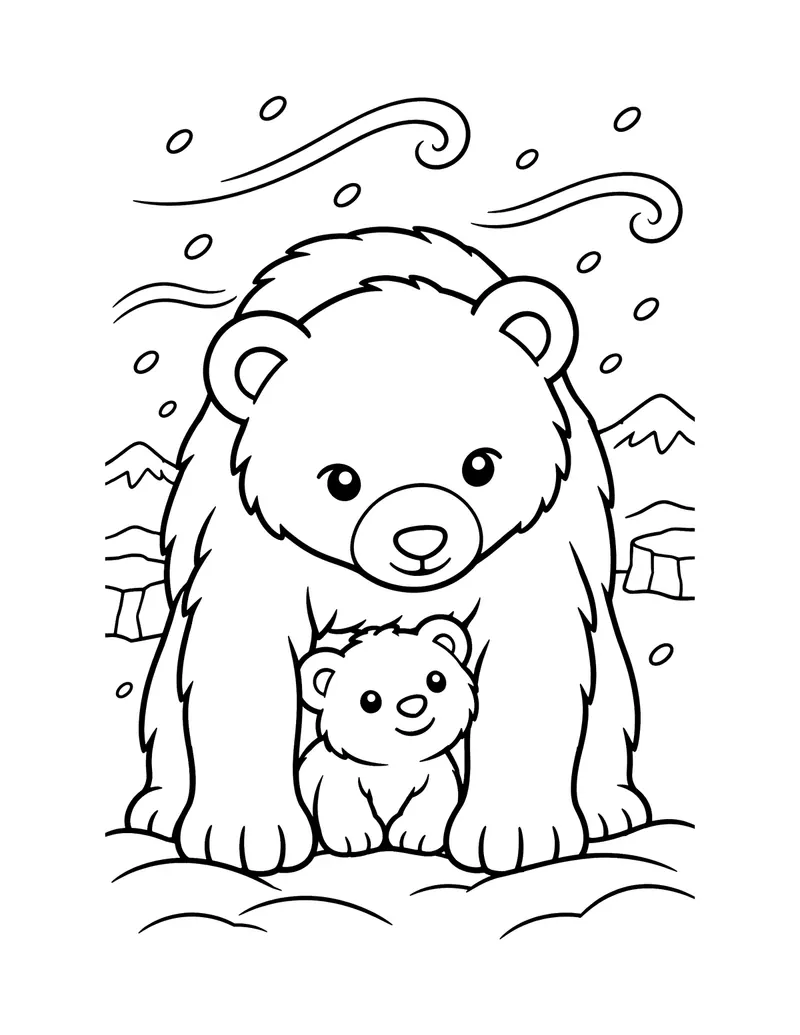 MediumNew!
Polar Bear Cub Sheltering Under Its Mother
Wind curls across the top of this scene, but the tiny cub has found a snug spot between its mother's two front legs.
Download PDF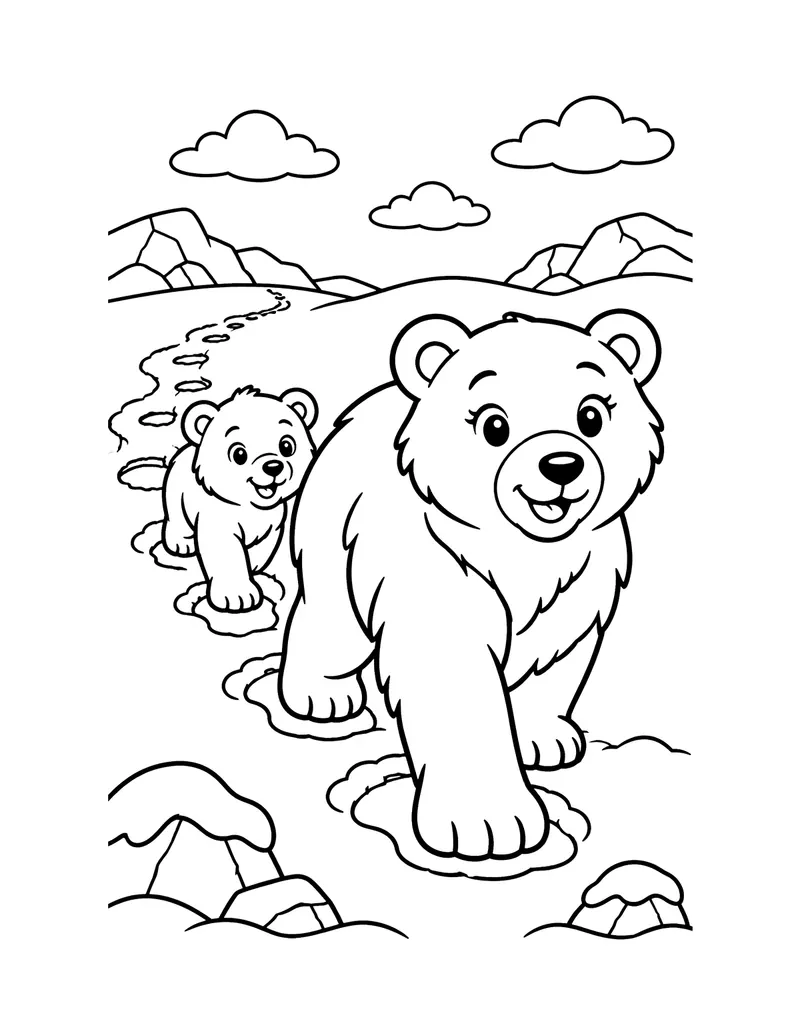 MediumNew!
Polar Bear Cub Following Mom's Footprints
Step by step, a cub trails behind its mother across the snow, planting its feet in the tracks she has left.
Download PDF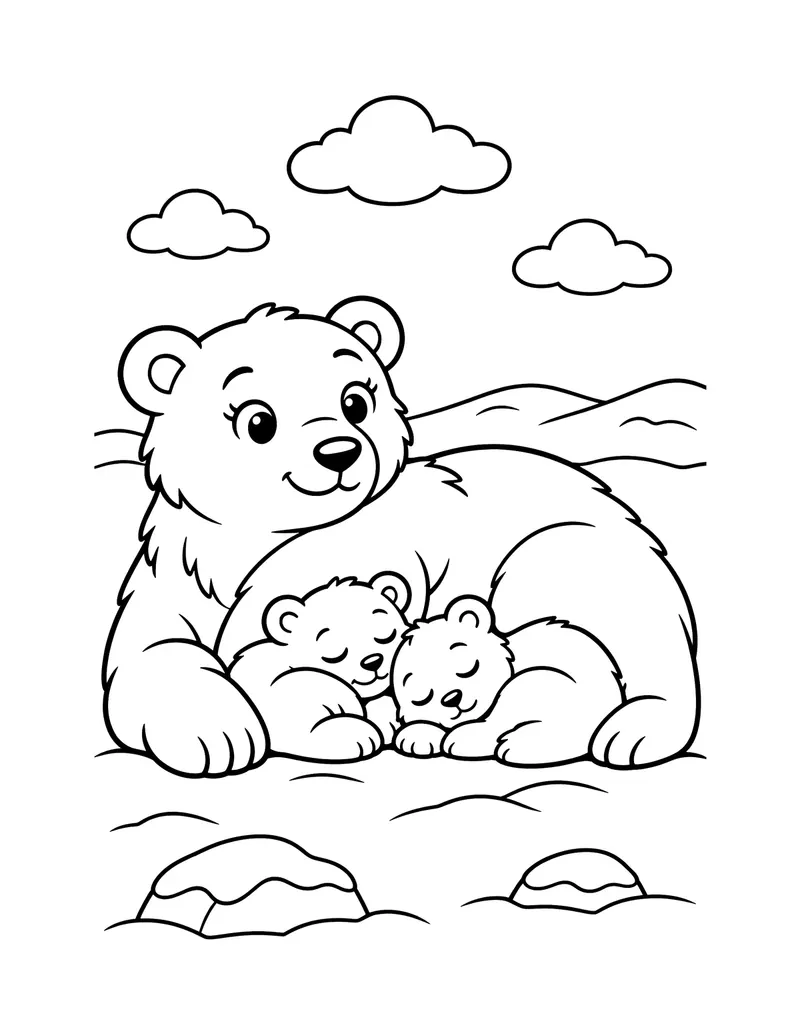 MediumNew!
Mother Polar Bear with Two Sleeping Cubs
Two sleepy cubs snuggle into their mother's side while she stretches out on the snow with her head up, smiling and…
Download PDFPolar Bears Swimming, Leaping and Resting on the Ice
Real polar bear behavior, one page at a time: walking straight toward you, sleeping curled with a nose under a paw, standing tall to sniff the wind, leaping a gap between floes, shaking off water like a wet dog, paddling among ice chunks and digging a bed in the snow. Use pale blue for ice shadows and deep teal for open water so the bear stands out.
 EasyNew!
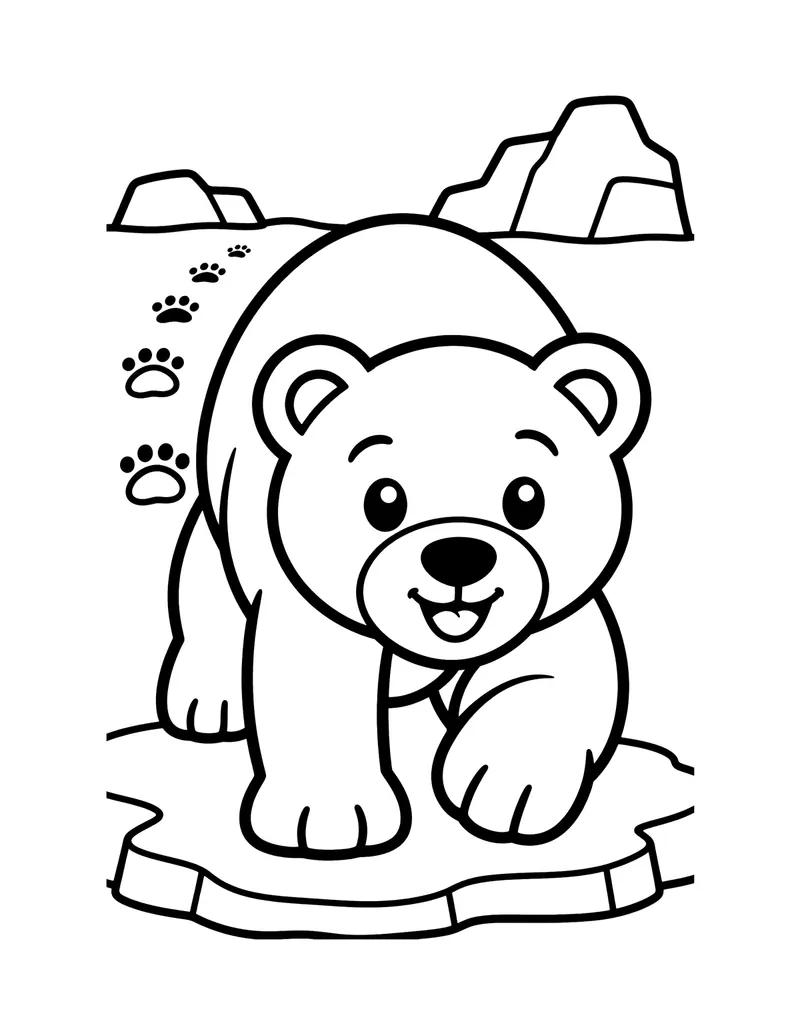
Polar Bear Walking Toward You
Here comes a friendly bear, padding straight toward you with an open smile and one big front paw lifted in mid-step.
Download PDF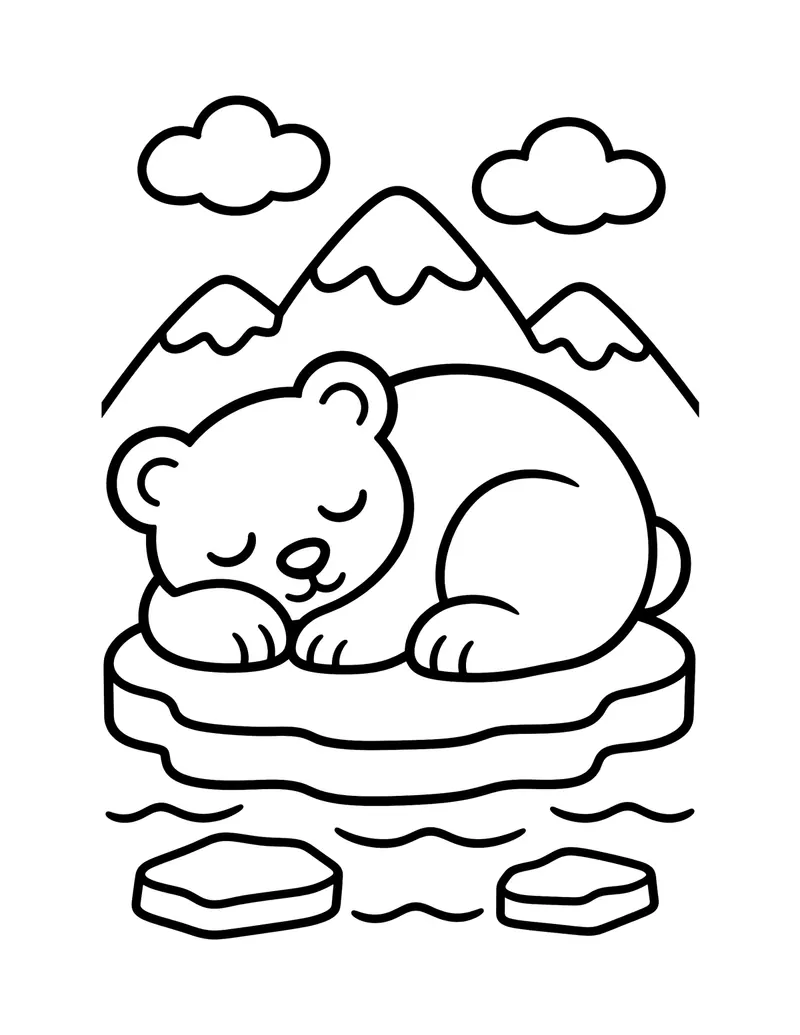 EasyNew!
Polar Bear Napping Curled on the Ice
Shh, this bear is fast asleep.
Download PDF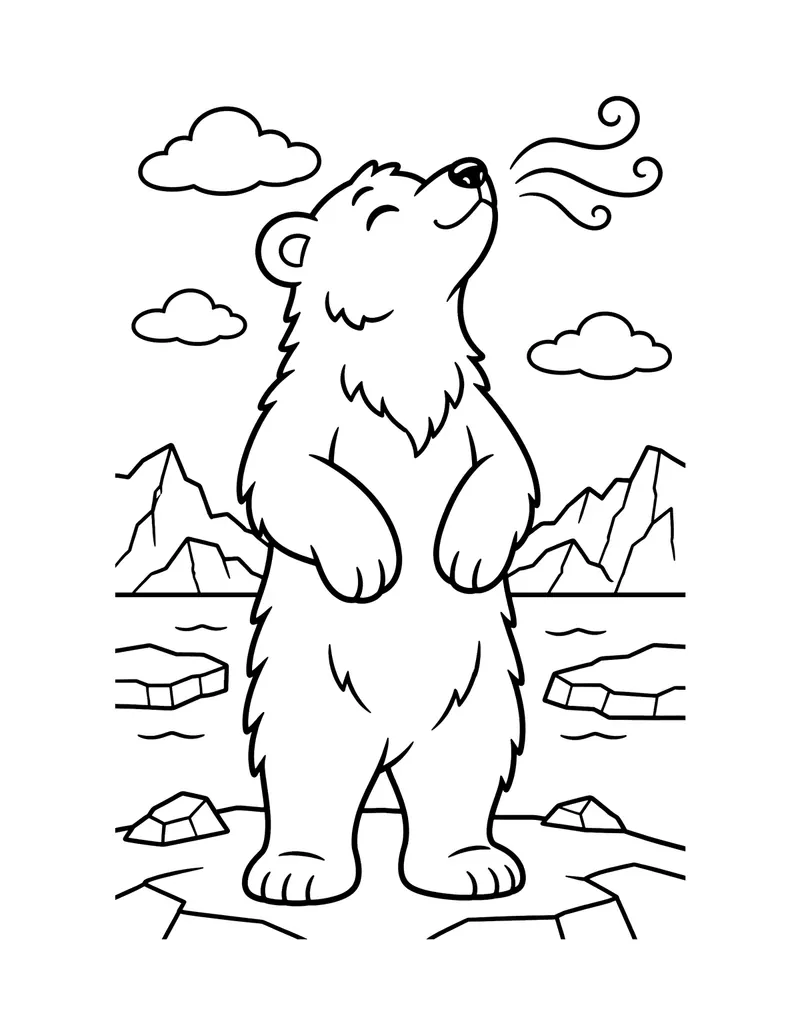 MediumNew!
Polar Bear Standing Tall to Sniff the Wind
Up on its hind legs, a shaggy bear lifts its nose high and closes its eyes to catch a scent on the breeze.
Download PDF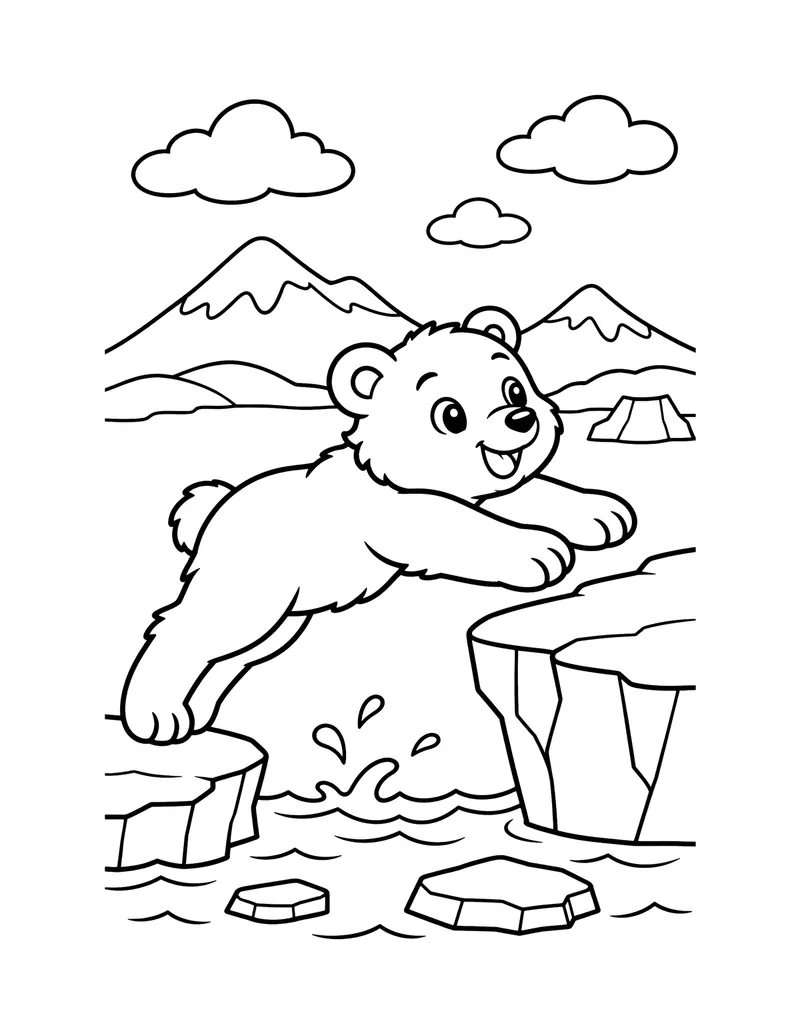 MediumNew!
Polar Bear Leaping Between Ice Floes
Whoosh!
Download PDF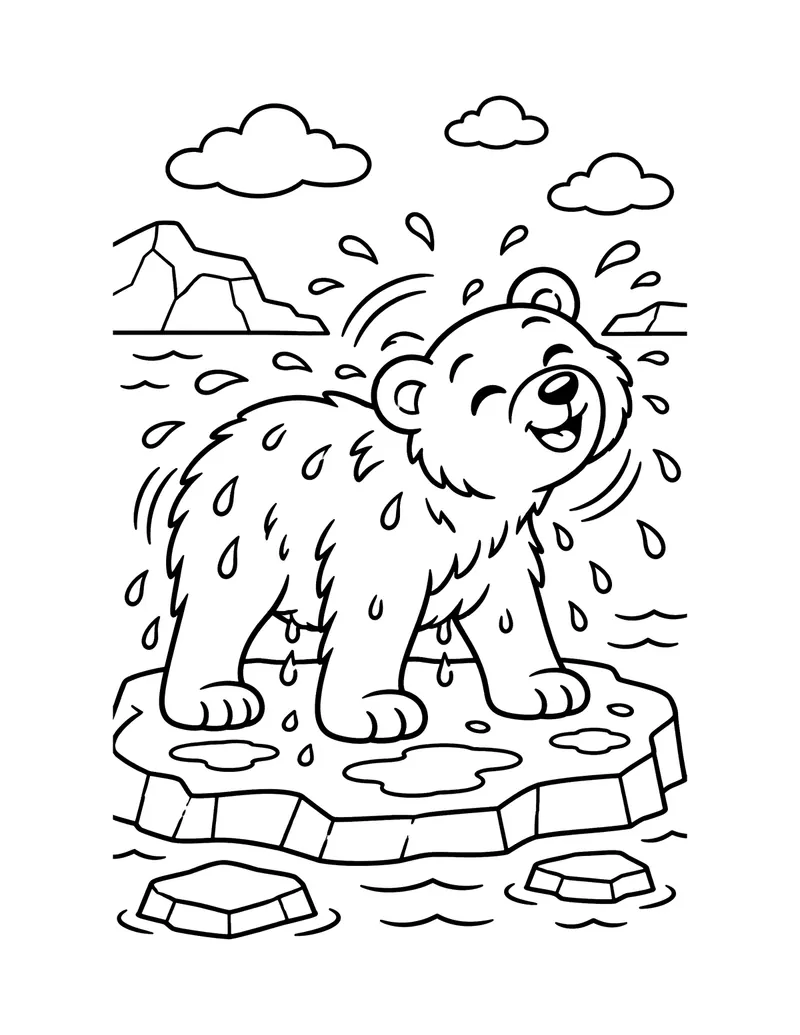 MediumNew!
Polar Bear Shaking Off Water
Water flies everywhere as this soggy bear gives its coat a big shake.
Download PDF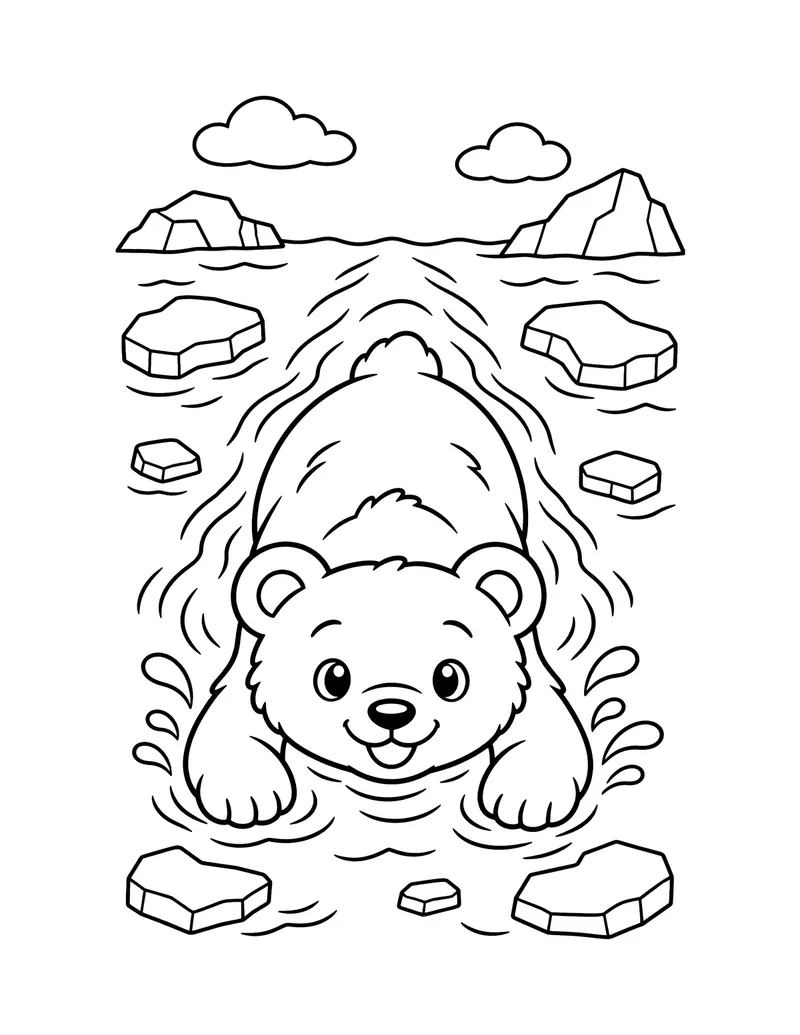 MediumNew!
Polar Bear Paddling Among Ice Chunks
A smiling swimmer heads right toward you, both front paws reaching forward at the surface of the sea.
Download PDF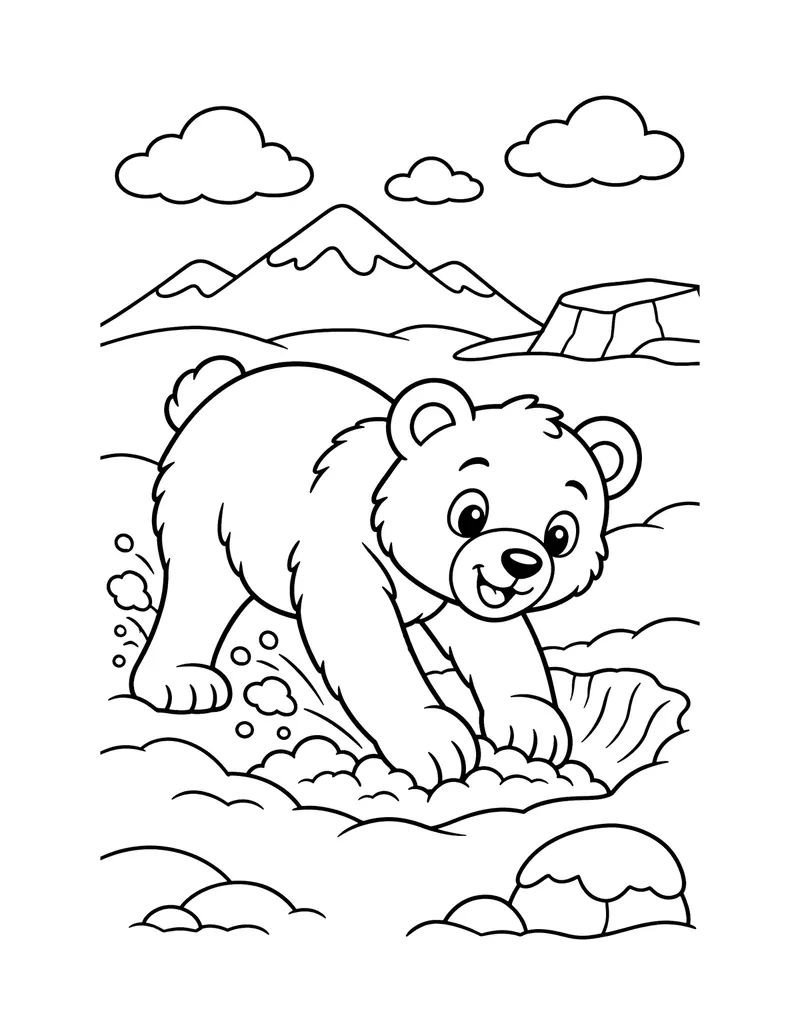
Arctic Neighbors: Gulls, Belugas and Reindeer
The Arctic is not empty. A snow bunting and a rock ptarmigan share the easy pages, ivory gulls wait near a resting bear for leftovers, belugas surface at the ice edge, and two Svalbard reindeer graze while a bear wanders past. The ptarmigan also wears white in winter, so save your darkest color for its tail feathers and beak.
 EasyNew!
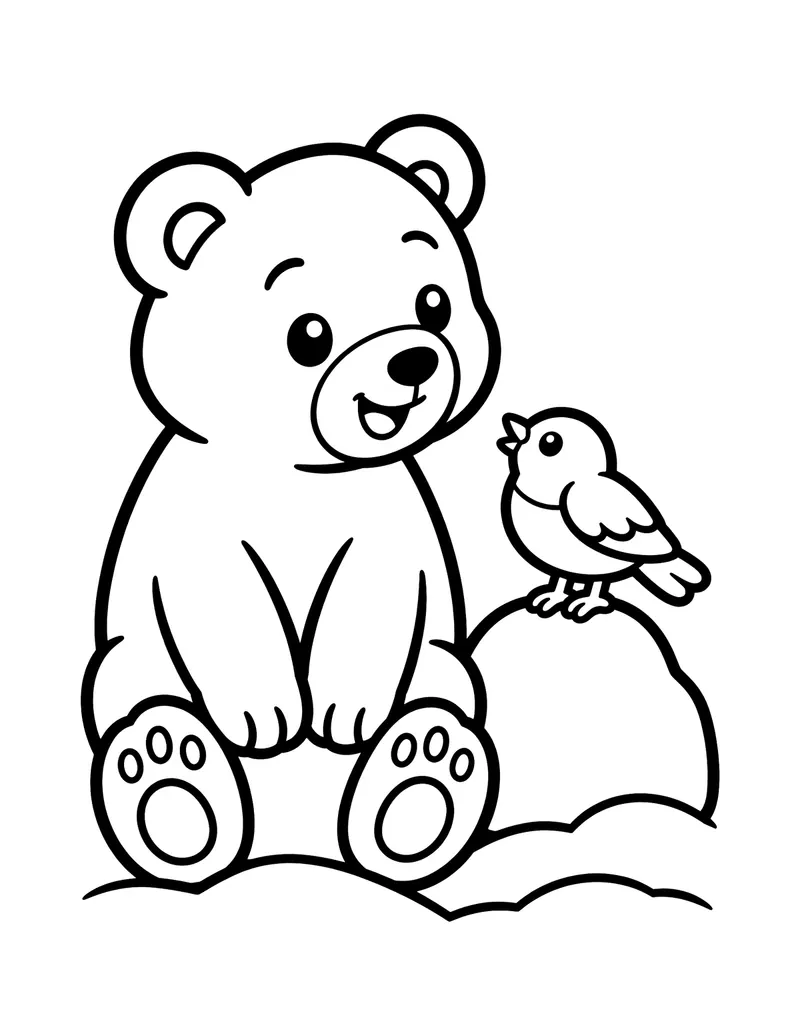
Polar Bear and a Snow Bunting
Chirp, chirp!
Download PDF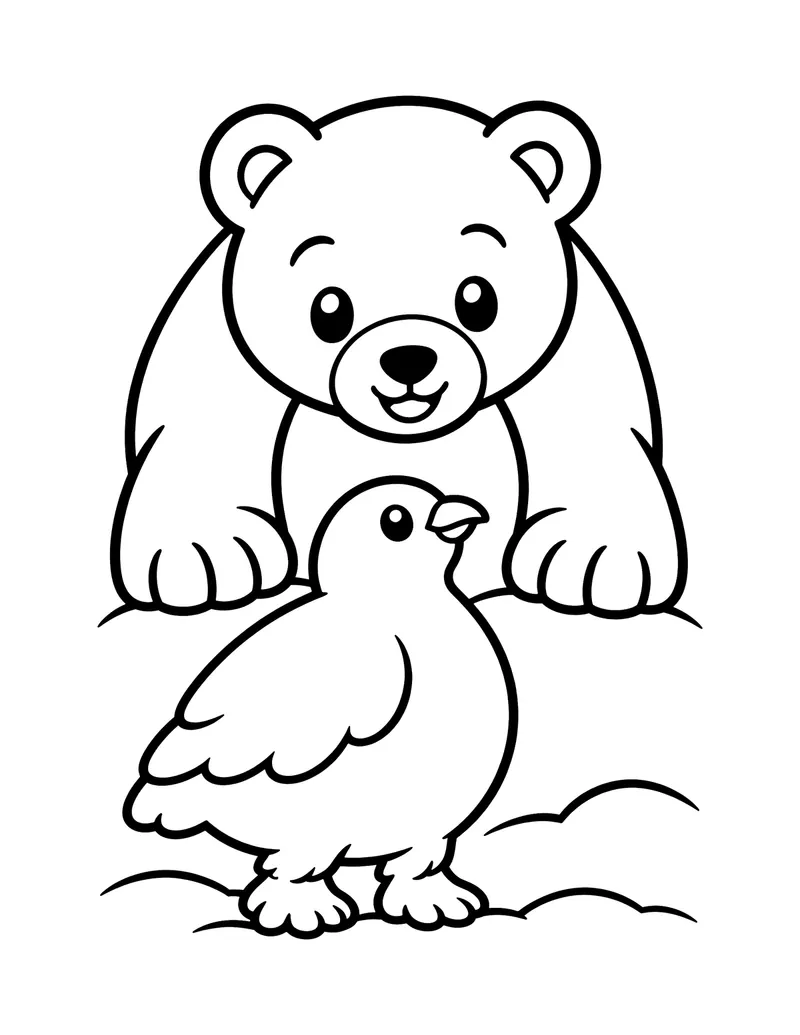 EasyNew!
Rock Ptarmigan and Polar Bear
Who is that peeking over from behind?
Download PDF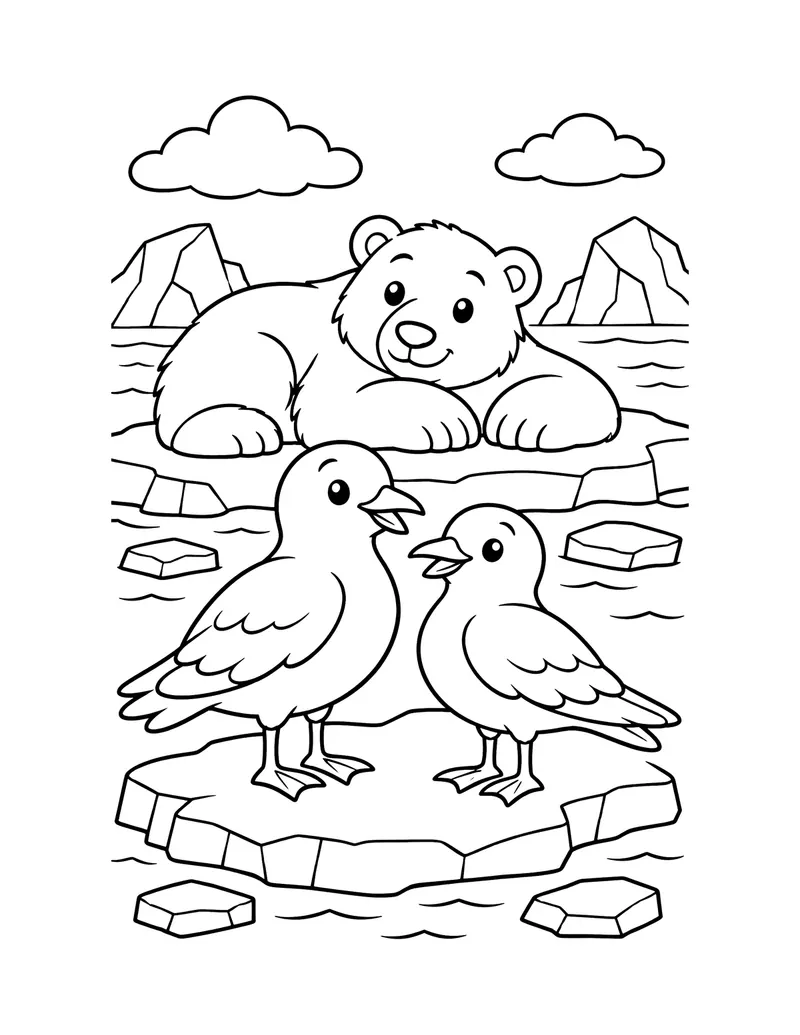 MediumNew!
Ivory Gulls Near a Resting Polar Bear
Two ivory gulls take center stage on a flat slab of sea ice, both with their beaks open as though they are in the…
Download PDF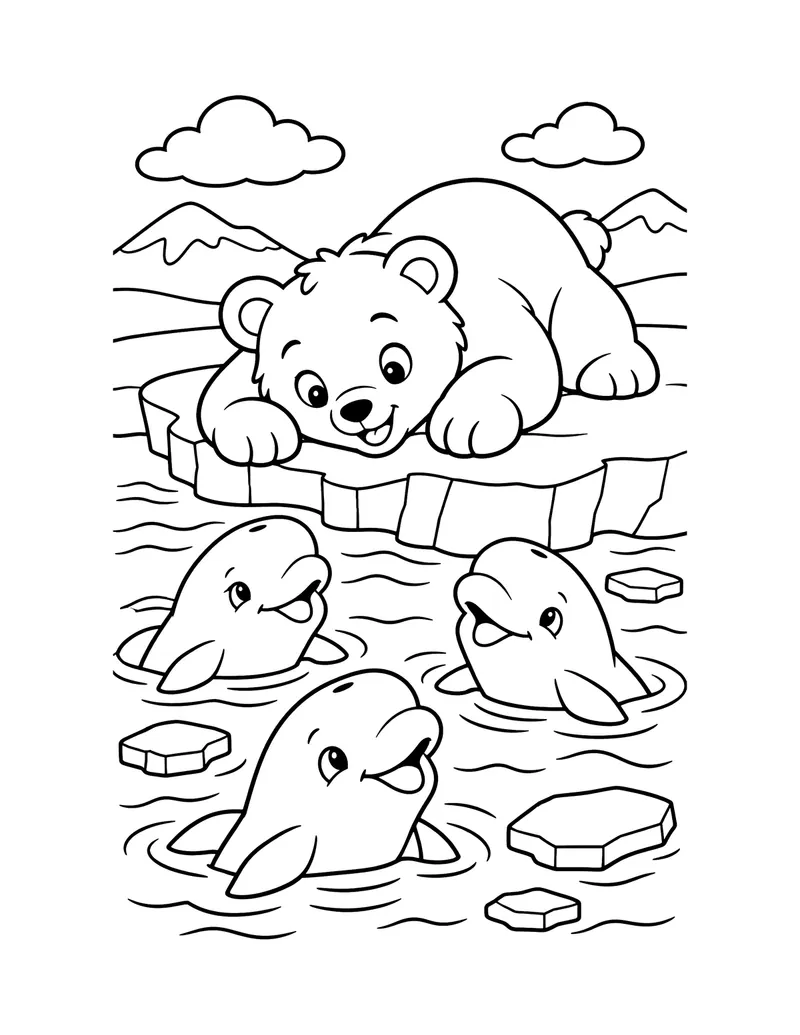 MediumNew!
Polar Bear Watching Belugas
Lean over the edge with this curious bear, who is stretched out on a thick ice shelf and gazing down at three beluga…
Download PDF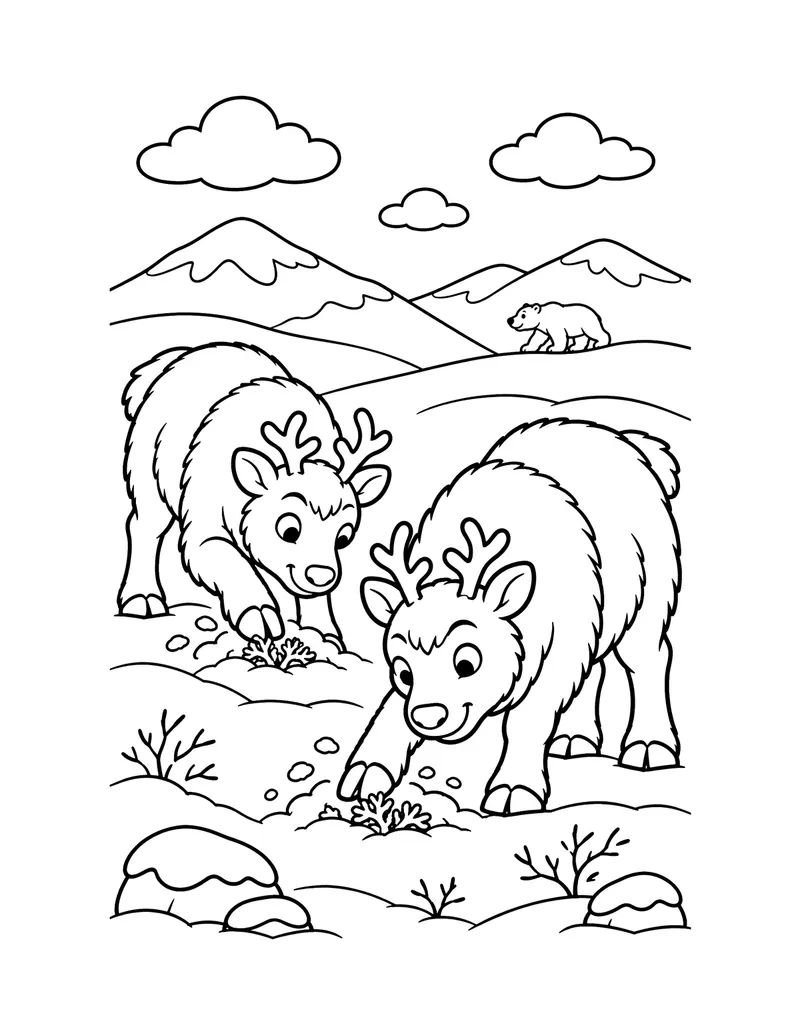 MediumNew!
Svalbard Reindeer and a Distant Polar Bear
Dinner is hiding under the snow, and two shaggy Svalbard reindeer are digging for it.
Download PDFPolar Bears Through the Arctic Seasons
Polar bear country changes color through the year. In summer a bear sniffs purple saxifrage among the rocks and walks a pebble beach with driftwood, and in fall one waits on the tundra for the sea to freeze. The two detailed pages climb a glacier edge and a moonlit ridge of jumbled ice. Use rusty reds, golds and browns on the fall tundra, not lawn green.
 EasyNew!
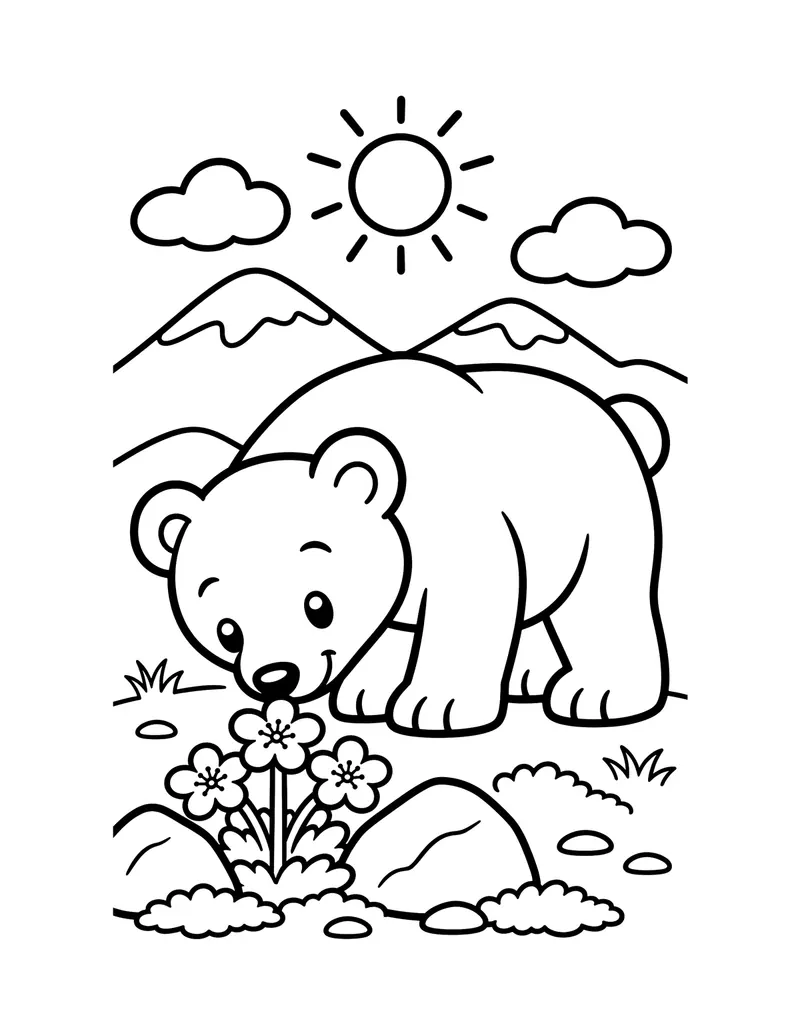
Polar Bear Sniffing Summer Flowers
Sunshine, flowers and one very curious nose make this a summer page.
Download PDF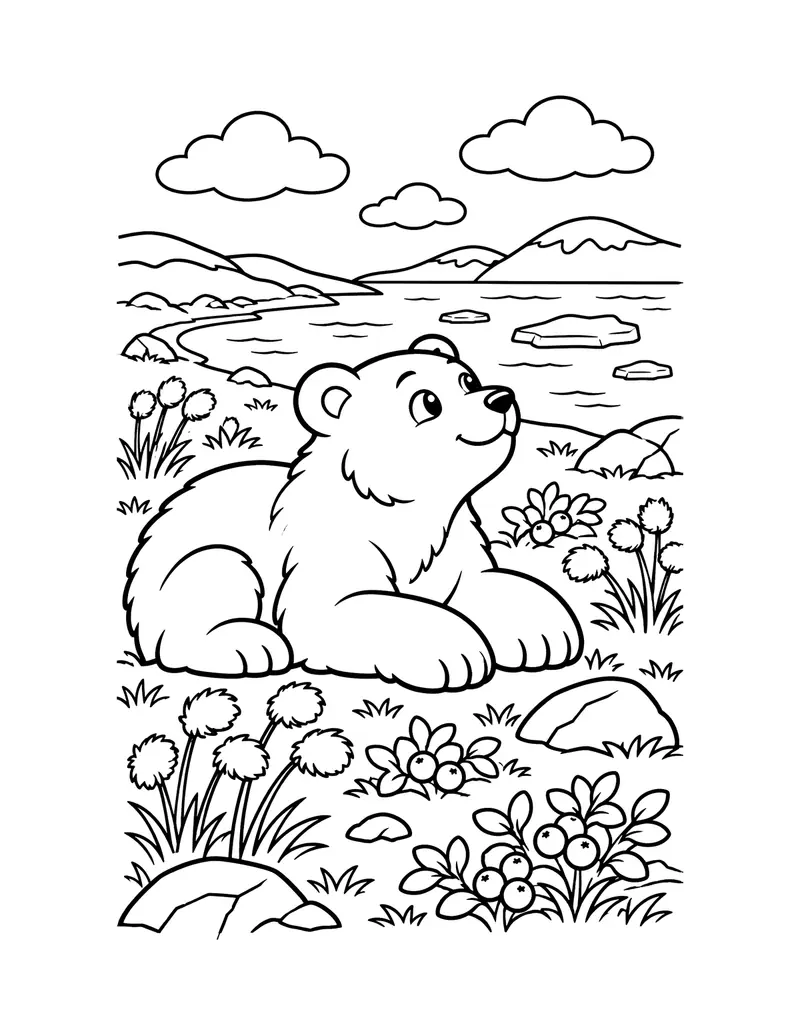 MediumNew!
Polar Bear Waiting on the Autumn Tundra
Fall has arrived on the tundra, and this fluffy bear is stretched out on the ground with its chin lifted, looking up…
Download PDF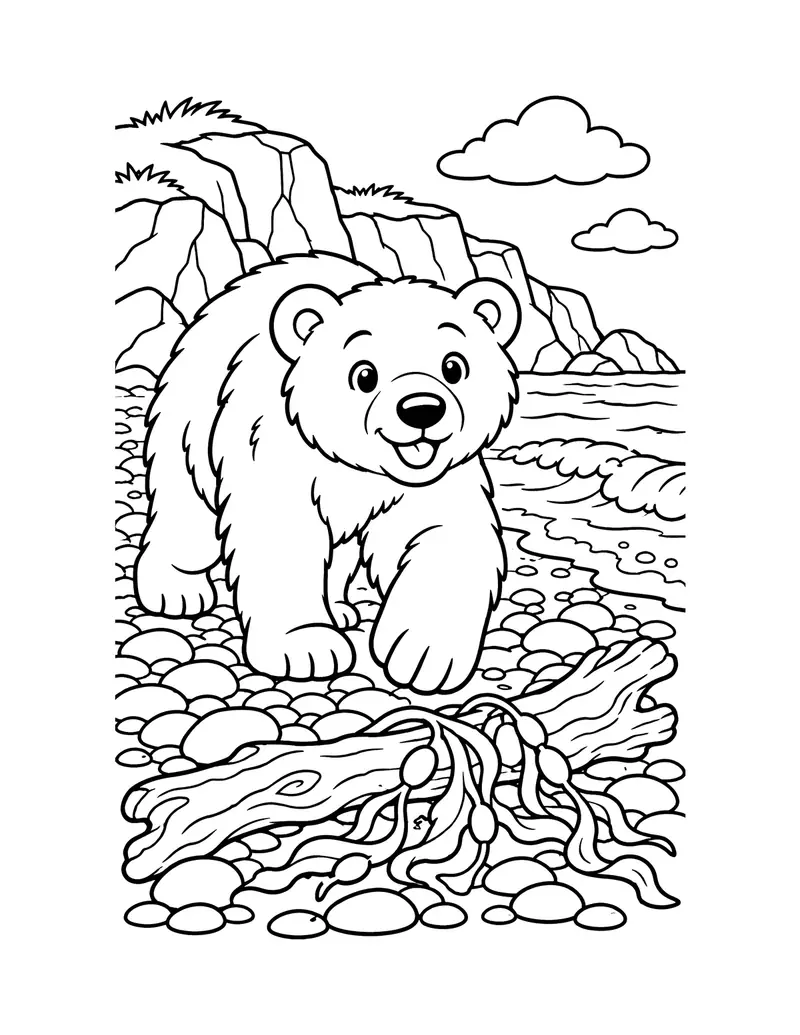 MediumNew!
Polar Bear on a Pebble Beach
Crunching over the stones, a shaggy young polar bear walks straight toward you, one front paw stepping forward and…
Download PDF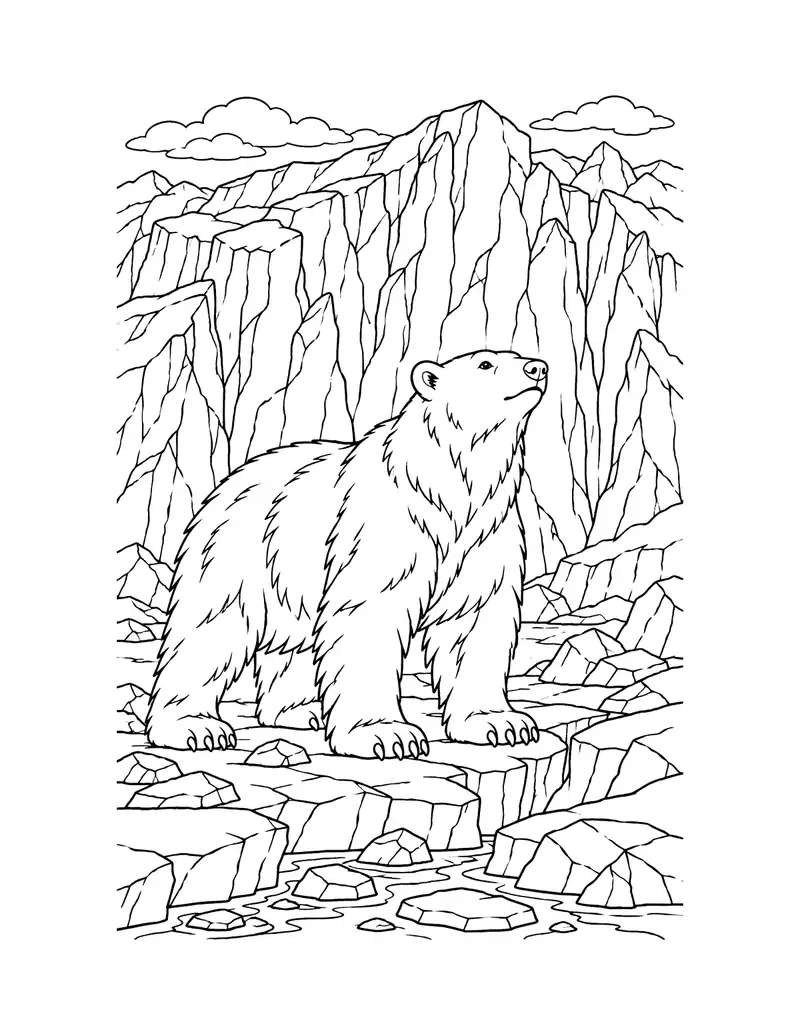 DetailedNew!
Polar Bear at a Cracked Glacier Wall
A wall of glacier ice fills the top of this page, split by long vertical cracks and rising to sharp, jagged peaks…
Download PDF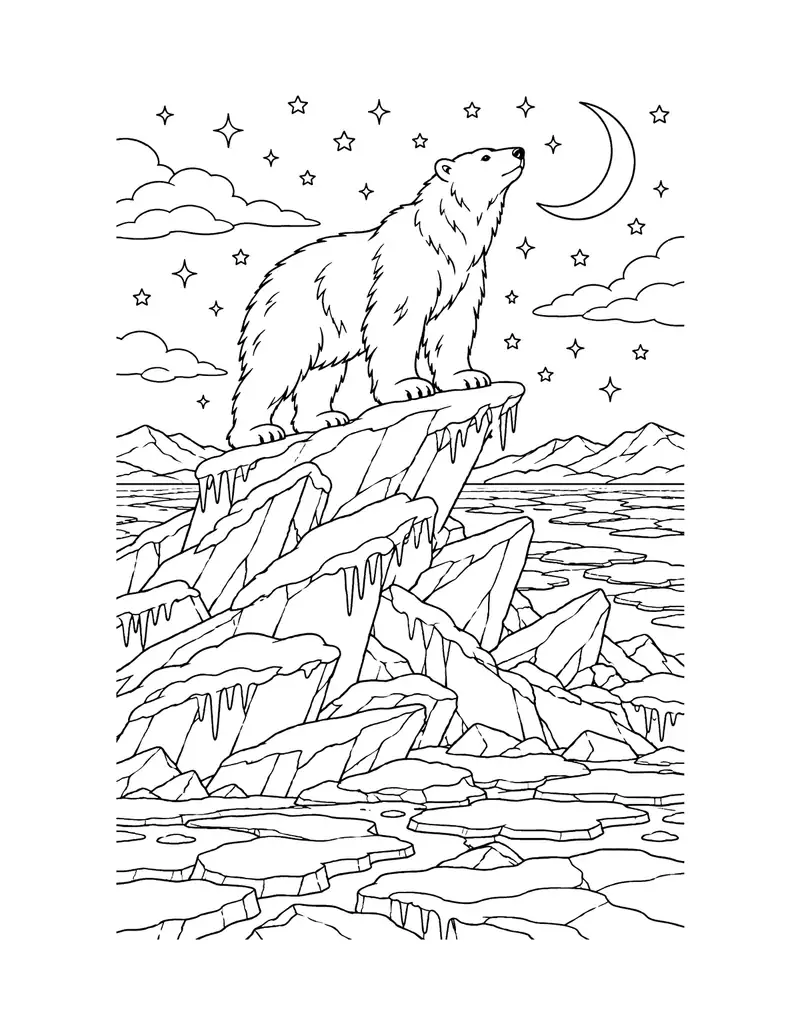 DetailedNew!
Polar Bear on an Ice Ridge Under the Moon
High on a heap of tilted ice slabs, a polar bear raises its head toward a thin crescent moon.
Download PDFRealistic and Geometric Polar Bears for Adults
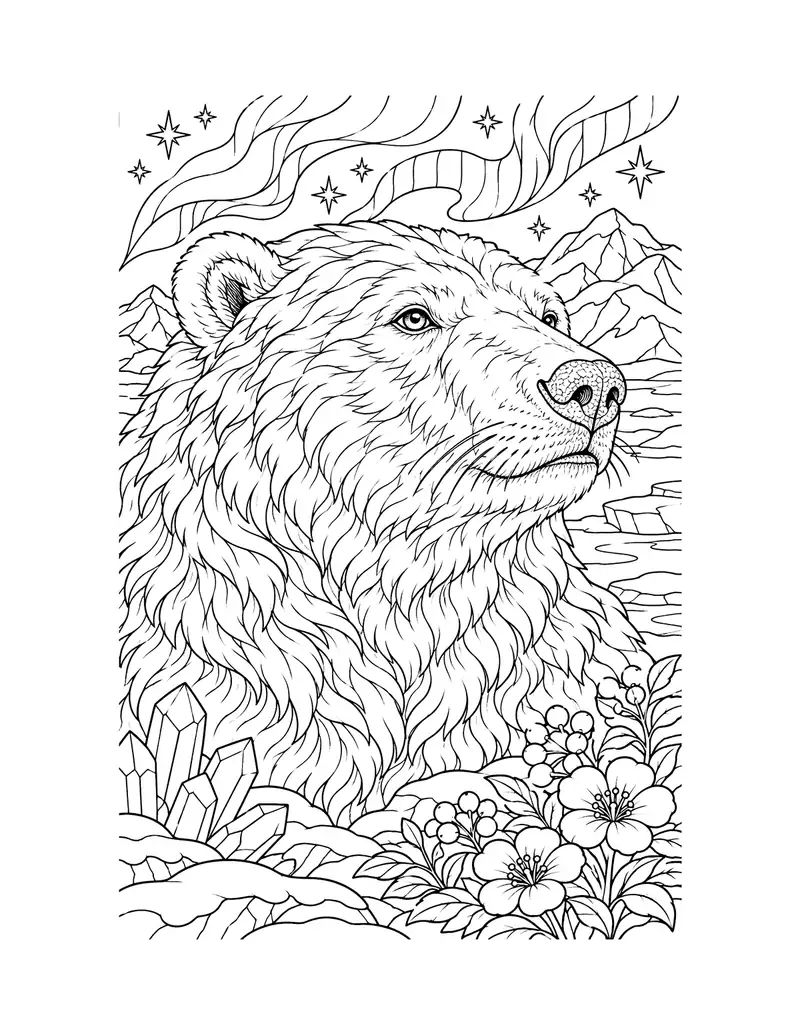
Six pages for patient colorists: a realistic head portrait full of fur texture, a split view of a bear on an iceberg with the hidden ice and fish below the waterline, a bird's-eye view of a bear swimming among floes, a mother and twins crossing a field of ice ridges, a geometric bear built from flat facets and a bear framed by Arctic plants. A limited palette keeps the busy areas calm.
 DetailedNew!
Realistic Polar Bear Head Portrait
Long, wavy clumps of fur cover this close-up polar bear, drawn from the shoulders up with its head turned in a…
Download PDF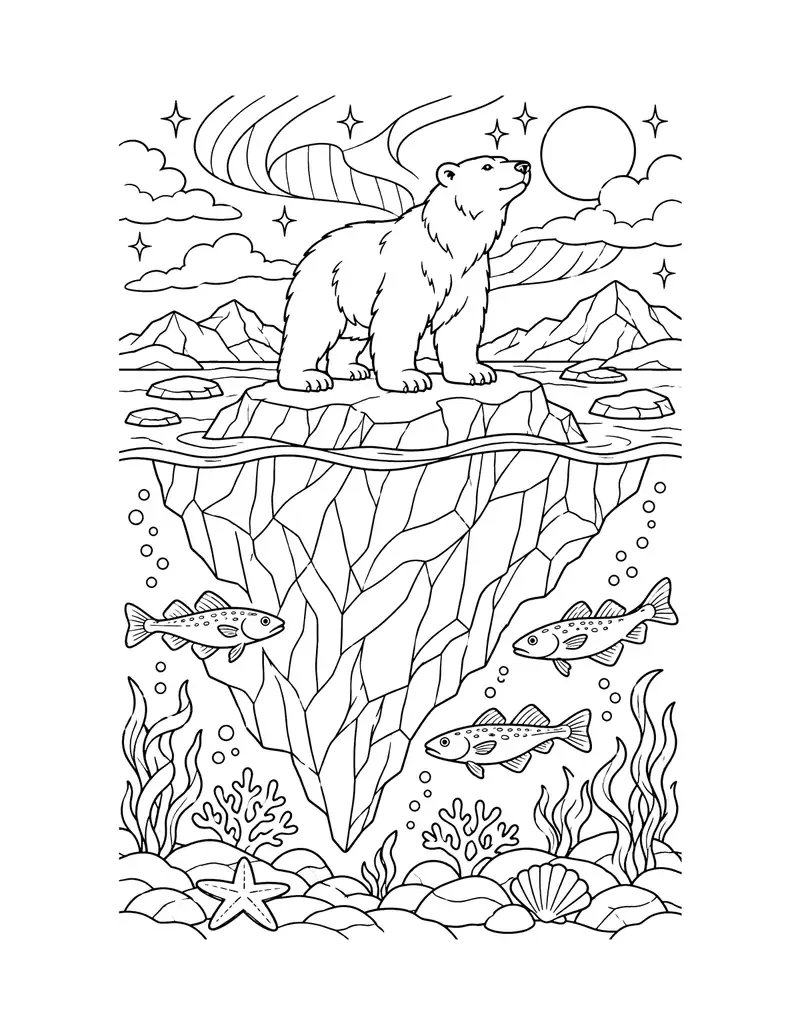 DetailedNew!
Polar Bear Iceberg Above and Below Water
One wavy waterline cuts this picture into two worlds.
Download PDF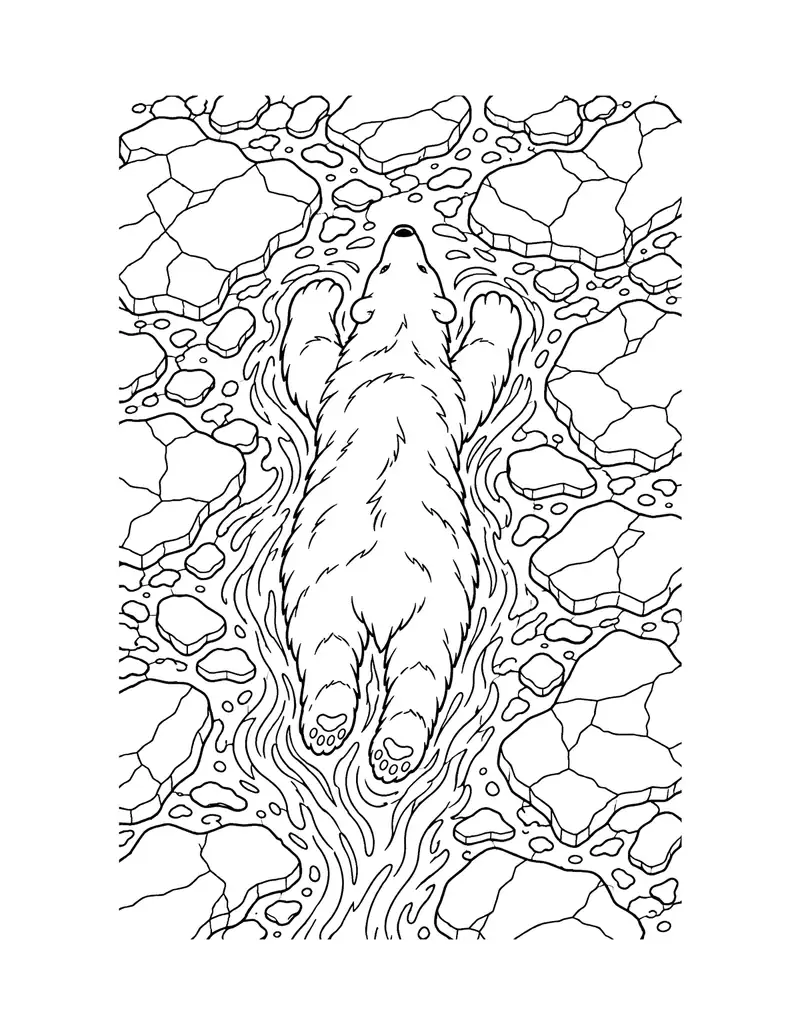 DetailedNew!
Bird's-Eye View of a Swimming Polar Bear
Looking straight down from above, you see a polar bear stretched out in a path of open water, front paws reaching…
Download PDF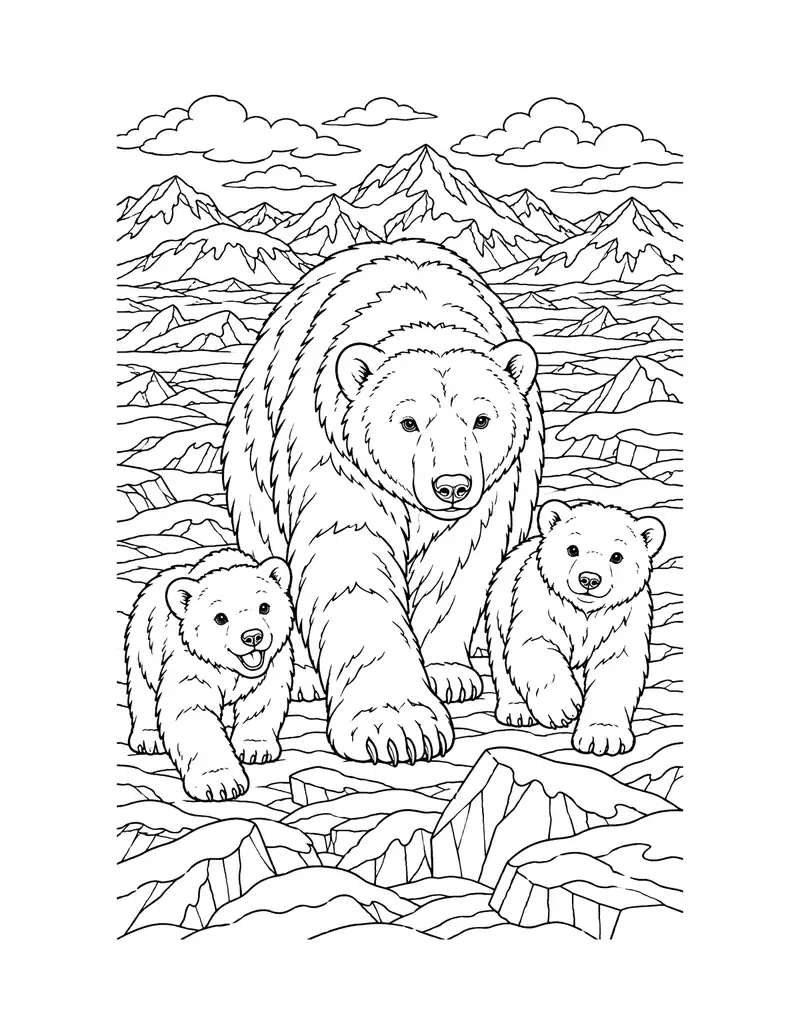 DetailedNew!
Polar Bear Family Crossing the Ice Ridges
Three faces look your way as a mother polar bear and her two cubs walk toward the front of the page.
Download PDF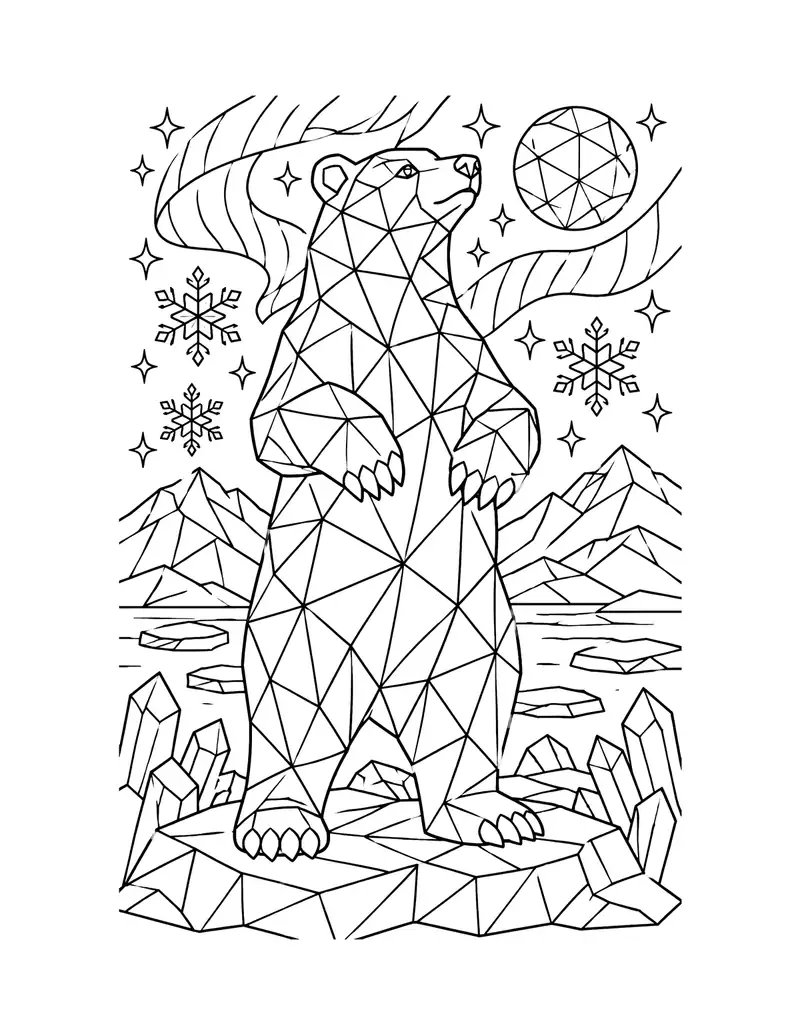 DetailedNew!
Geometric Low-Poly Polar Bear
Triangles of all sizes fit together to form this polar bear, which stands tall on its hind legs with its front paws…
Download PDF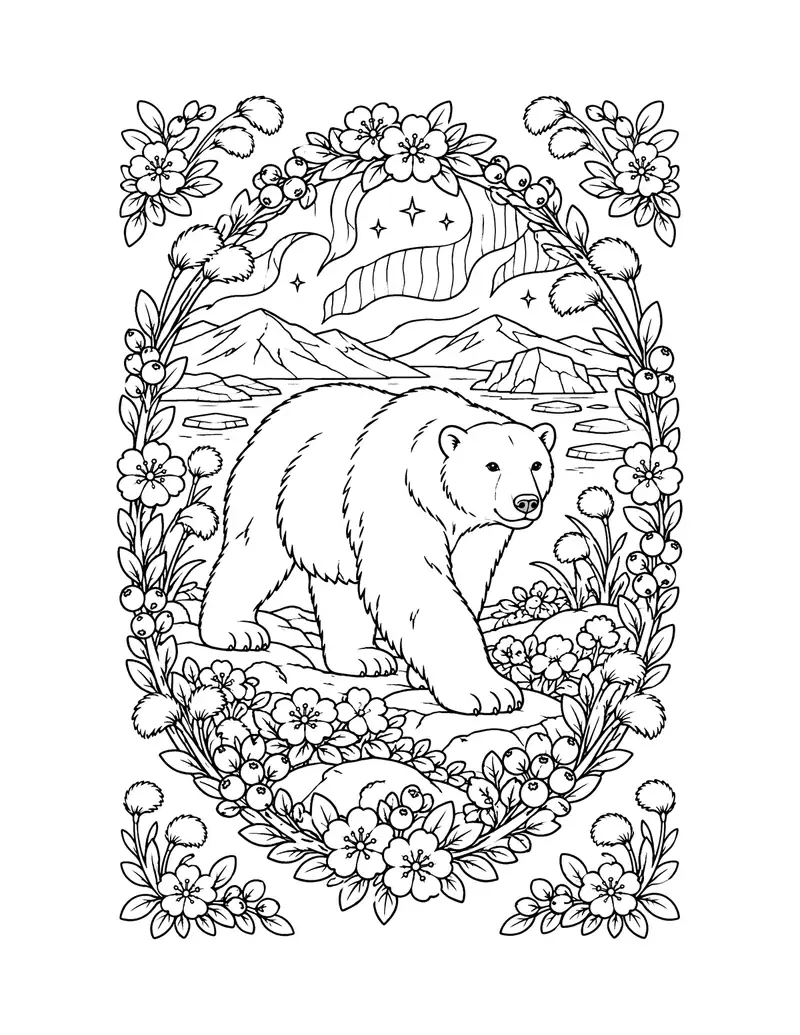 DetailedNew!
Polar Bear in an Arctic Plant Frame
Framed like a nature print, a polar bear strolls along a rocky shore inside a tall oval made of leafy stems.
Download PDFPolar Bear Coloring Pages FAQ
What does the polar bear's scientific name mean?
Its scientific name is Ursus maritimus, which roughly means sea bear. The name fits: polar bears hunt seals from the sea ice and can swim long distances between floes. The sea-ice group shows that side of their life, from leaping floes to paddling at the surface.
How do polar bears walk on ice without slipping?
Their big paws spread their weight like snowshoes. Fur grows between the toe pads, the pads are covered in small bumps that grip, and short curved claws dig into the ice. The close-up paw page gives you each big pad to color, ringed by shaggy fur.
Where do polar bears go when the sea ice melts in summer?
In some places, such as Hudson Bay in Canada, they come ashore and wait on the tundra, resting to save energy until the bay freezes again in late fall. The autumn tundra page shows a bear doing exactly that among the cottongrass.
When do polar bear cubs first leave the den?
Cubs are born in a snow den in midwinter, blind and about the size of a guinea pig. They stay inside, nursing and growing, until around March or April, when their mother leads them out. The den page in the mothers group shows that first step outside.
Which polar bear pages are best for a child's first try?
The cub asleep on its back and the front-facing face portrait are the simplest: one big bear and almost nothing behind it. After those, try the giant paw close-up or the cub balancing on a small ice floe, which add just one or two extra shapes.